Wednesday, December 09, 2015

Paris Machine Learning #4 Season 3: Netflix, CRISPR, SFdS, Craft.ai


We will be at Salle Pierre Nicole (Maison des Mines) thanks to Société Française de Statistique. The networking event is sponsored by MathWorks. Thank you to both organizations !

The meetup should start at 19h00 (7 pm) Paris time. We will have two remote speakers (one in CA the other in MA). Here is the program:
As we get closer to the meetup, presentations will be added to this page.


Join the CompressiveSensing subreddit or the Google+ Community or the Facebook page and post there !
Liked this entry ? subscribe to Nuit Blanche's feed, there's more where that came from. You can also subscribe to Nuit Blanche by Email, explore the Big Picture in Compressive Sensing or the Matrix Factorization Jungle and join the conversations on compressive sensing, advanced matrix factorization and calibration issues on Linkedin.

Tuesday, December 08, 2015

Inview Corporation Recent Developments


We generally talk at length about theoretical developments here on Nuit Blanche, but the hardware aspect of things when it comes to sensing is something I have cared for in a long while.  Indeed any theoretical developments is fine but eventually, hardware has to follow.
 
As it happens, I was recently talking to some of the good folks at Inview Corporation in Austin, TX and figured it was probably a good time to catch up with their recent developments. Recall, Inview embeds compressive sensing technology in hardware and even sells CS based cameras. Here are their latest blog entries:
 The first and most recent blog entry mentions this recent paper: Recent results in single-pixel compressive imaging using selective measurement strategies by Matthew A. Herman ; Tyler Weston ; Lenore McMackin ; Yun Li ; Jianbo Chen ; Kevin F. Kelly 
 
Obviously, I have no financial stakes in Inview Corporation.
 
Join the CompressiveSensing subreddit or the Google+ Community or the Facebook page and post there !
Liked this entry ? subscribe to Nuit Blanche's feed, there's more where that came from. You can also subscribe to Nuit Blanche by Email, explore the Big Picture in Compressive Sensing or the Matrix Factorization Jungle and join the conversations on compressive sensing, advanced matrix factorization and calibration issues on Linkedin.

Innovation Pursuit: A New Approach to Subspace Clustering / Continuous and Simultaneous Gesture and Posture Recognition for Commanding a Robotic Wheelchair; Towards Spotting the Signal Patterns

Two preprints on subspace clustering: One is about a new algorithm while the other one focuses on a specific application (while still making contribution to the algorithmic). I note from the second paper, the following excerpt from the conclusion
 
The framework we draw on here, not only leads to overwhelmingly accurate classification regardless of the sensor domain, but also, it unveils the class of the observed signal pattern sequentially by a decision tree regardless of whether the signal patterns vary in length or not. It is also closely related to signal pattern spotting on a streaming signal due to the signal used in training process. The signal used for training encompasses two different gesture patterns, the boundaries of which are not known in advance. Therefore, the boundary information is implicitly decoded through out the decision tree.


Innovation Pursuit: A New Approach to Subspace Clustering
Mostafa Rahmani, George Atia

In subspace clustering, a group of data points belonging to a union of subspaces are assigned membership to their respective subspaces. This paper presents a new approach dubbed Innovation Pursuit (iPursuit) to the problem of subspace clustering using a new geometrical idea whereby each subspace is identified based on its novelty with respect to the other subspaces. The proposed approach finds the subspaces consecutively by solving a series of simple linear optimization problems, each searching for some direction in the span of the data that is potentially orthogonal to all subspaces except for the one to be identified in one step of the algorithm. A detailed mathematical analysis is provided establishing sufficient conditions for the proposed approach to correctly cluster the data points. Remarkably, the proposed approach can provably yield exact clustering even when the subspaces have significant intersections under mild conditions on the distribution of the data points in the subspaces. Moreover, It is shown that the complexity of iPursuit is almost independent of the dimension of the data. The numerical simulations demonstrate that iPursuit can often outperform the state-of-the-art subspace clustering algorithms, more so for subspaces with significant intersections.


Continuous and Simultaneous Gesture and Posture Recognition for Commanding a Robotic Wheelchair; Towards Spotting the Signal Patterns
Ali Boyali, Naohisa Hashimoto, Manolya Kavakli

Spotting signal patterns with varying lengths has been still an open problem in the literature. In this study, we describe a signal pattern recognition approach for continuous and simultaneous classification of a tracked hand's posture and gestures and map them to steering commands for control of a robotic wheelchair. The developed methodology not only affords 100\% recognition accuracy on a streaming signal for continuous recognition, but also brings about a new perspective for building a training dictionary which eliminates human intervention to spot the gesture or postures on a training signal. In the training phase we employ a state of art subspace clustering method to find the most representative state samples. The recognition and training framework reveal boundaries of the patterns on the streaming signal with a successive decision tree structure intrinsically. We make use of the Collaborative ans Block Sparse Representation based classification methods for continuous gesture and posture recognition.
 
 
Join the CompressiveSensing subreddit or the Google+ Community or the Facebook page and post there !
Liked this entry ? subscribe to Nuit Blanche's feed, there's more where that came from. You can also subscribe to Nuit Blanche by Email, explore the Big Picture in Compressive Sensing or the Matrix Factorization Jungle and join the conversations on compressive sensing, advanced matrix factorization and calibration issues on Linkedin.

Monday, December 07, 2015

Random Features Roundup

Following up on this morning's blog entry, here are some papers/posters featuring the use of Random Features:


A wide range of machine learning problems, including astronomical inference about galaxy clusters, natural image scene classification, parametric statistical inference, and predictions of public opinion, can be well-modeled as learning a function on (samples from) distributions. This thesis explores problems in learning such functions via kernel methods. The first challenge is one of computational efficiency when learning from large numbers of distributions: the computation of typical methods scales between quadratically and cubically, and so they are not amenable to large datasets. We investigate the approach of approximate embeddings into Euclidean spaces such that inner products in the embedding space approximate kernel values between the source distributions. We present a new embedding for a class of information-theoretic distribution distances, and evaluate it and existing embeddings on several real-world applications. We also propose the integration of these techniques with deep learning models so as to allow the simultaneous extraction of rich representations for inputs with the use of expressive distributional classifiers. In a related problem setting, common to astrophysical observations, autonomous sensing, and electoral polling, we have the following challenge: when observing samples is expensive, but we can choose where we would like to do so, how do we pick where to observe? We propose the development of a method to do so in the distributional learning setting (which has a natural application to astrophysics), as well as giving a method for a closely related problem where we search for instances of patterns by making point observations. Our final challenge is that the choice of kernel is important for getting good practical performance, but how to choose a good kernel for a given problem is not obvious. We propose to adapt recent kernel learning techniques to the distributional setting, allowing the automatic selection of good kernels for the task at hand. Integration with deep networks, as previously mentioned, may also allow for learning the distributional distance itself. Throughout, we combine theoretical results with extensive empirical evaluations to increase our understanding of the methods. 


Compact Bilinear Pooling
Yang Gao, Oscar Beijbom, Ning Zhang, Trevor Darrell

Bilinear models has been shown to achieve impressive performance on a wide range of visual tasks, such as semantic segmentation, fine grained recognition and face recognition. However, bilinear features are high dimensional, typically on the order of hundreds of thousands to a few million, which makes them impractical for subsequent analysis. We propose two compact bilinear representations with the same discriminative power as the full bilinear representation but with only a few thousand dimensions. Our compact representations allow back-propagation of classification errors enabling an end-to-end optimization of the visual recognition system. The compact bilinear representations are derived through a novel kernelized analysis of bilinear pooling which provide insights into the discriminative power of bilinear pooling, and a platform for further research in compact pooling methods. Extensive experimentation illustrate the applicability of the proposed compact representations, for image classification and few-shot learning across several visual recognition tasks.
Dougal's page is here.


Parallel Predictive Entropy Search for Batch Global Optimization of Expensive Objective Functions
Amar Shah, Zoubin Ghahramani

We develop parallel predictive entropy search (PPES), a novel algorithm for Bayesian optimization of expensive black-box objective functions. At each iteration, PPES aims to select a batch of points which will maximize the information gain about the global maximizer of the objective. Well known strategies exist for suggesting a single evaluation point based on previous observations, while far fewer are known for selecting batches of points to evaluate in parallel. The few batch selection schemes that have been studied all resort to greedy methods to compute an optimal batch. To the best of our knowledge, PPES is the first non-greedy batch Bayesian optimization strategy. We demonstrate the benefit of this approach in optimization performance on both synthetic and real world applications, including problems in machine learning, rocket science and robotics.

Related:

Probabilistic Integration
François-Xavier Briol, Chris. J. Oates, Mark Girolami, Michael A. Osborne, Dino Sejdinovic
(Submitted on 3 Dec 2015)
Probabilistic numerical methods aim to model numerical error as a source of epistemic uncertainty that is subject to probabilistic analysis and reasoning, enabling the principled propagation of numerical uncertainty through a computational pipeline. In this paper we focus on numerical methods for integration. We present probabilistic (Bayesian) versions of both Markov chain and Quasi Monte Carlo methods for integration and provide rigorous theoretical guarantees for convergence rates, in both posterior mean and posterior contraction. The performance of probabilistic integrators is guaranteed to be no worse than non-probabilistic integrators and is, in many cases, asymptotically superior. These probabilistic integrators therefore enjoy the "best of both worlds", leveraging the sampling efficiency of advanced Monte Carlo methods whilst being equipped with valid probabilistic models for uncertainty quantification. Several applications and illustrations are provided, including examples from computer vision and system modelling using non-linear differential equations. A survey of open challenges in probabilistic integration is provided.


Structured learning of metric ensembles with application to person re-identification
Sakrapee Paisitkriangkrai, Lin Wu, Chunhua Shen, Anton van den Hengel
(Submitted on 27 Nov 2015)
Matching individuals across non-overlapping camera networks, known as person re-identification, is a fundamentally challenging problem due to the large visual appearance changes caused by variations of viewpoints, lighting, and occlusion. Approaches in literature can be categoried into two streams: The first stream is to develop reliable features against realistic conditions by combining several visual features in a pre-defined way; the second stream is to learn a metric from training data to ensure strong inter-class differences and intra-class similarities. However, seeking an optimal combination of visual features which is generic yet adaptive to different benchmarks is a unsoved problem, and metric learning models easily get over-fitted due to the scarcity of training data in person re-identification. In this paper, we propose two effective structured learning based approaches which explore the adaptive effects of visual features in recognizing persons in different benchmark data sets. Our framework is built on the basis of multiple low-level visual features with an optimal ensemble of their metrics. We formulate two optimization algorithms, CMCtriplet and CMCstruct, which directly optimize evaluation measures commonly used in person re-identification, also known as the Cumulative Matching Characteristic (CMC) curve.


Diffusion Representations
Moshe Salhov, Amit Bermanis, Guy Wolf, Amir Averbuch
(Submitted on 19 Nov 2015)
Diffusion Maps framework is a kernel based method for manifold learning and data analysis that defines diffusion similarities by imposing a Markovian process on the given dataset. Analysis by this process uncovers the intrinsic geometric structures in the data. Recently, it was suggested to replace the standard kernel by a measure-based kernel that incorporates information about the density of the data. Thus, the manifold assumption is replaced by a more general measure-based assumption.
The measure-based diffusion kernel incorporates two separate independent representations. The first determines a measure that correlates with a density that represents normal behaviors and patterns in the data. The second consists of the analyzed multidimensional data points.
In this paper, we present a representation framework for data analysis of datasets that is based on a closed-form decomposition of the measure-based kernel. The proposed representation preserves pairwise diffusion distances that does not depend on the data size while being invariant to scale. For a stationary data, no out-of-sample extension is needed for embedding newly arrived data points in the representation space. Several aspects of the presented methodology are demonstrated on analytically generated data.
Join the CompressiveSensing subreddit or the Google+ Community or the Facebook page and post there !
Liked this entry ? subscribe to Nuit Blanche's feed, there's more where that came from. You can also subscribe to Nuit Blanche by Email, explore the Big Picture in Compressive Sensing or the Matrix Factorization Jungle and join the conversations on compressive sensing, advanced matrix factorization and calibration issues on Linkedin.

Nonlinearities and Random Projections


Suresh just mentioned the following:
  If you want any hope of understanding the complexity of deep learning, you need to confront threshold circuits (circuits made from threshold gates). These are notoriously hard to deal with, and in many ways represent the limit of what's learnable. Daniel Kane and +Ryan Williams have a new preprint out with lower bounds for depth 2 and depth 3 threshold circuits. 

At about the same time, on twitter, Laurent asked the following:

He added: "Rand. Proj. *with* non-linear operation, eg ". I usually list these under the nonlinearCS tag but I am not consistent. Laurent then mentioned the ones he had in mind:
I mentioned that

Petros pointed out to his recent work

Nikhil pointed out the

 Here is the paper mentioned by Suresh at the beginning of the post:

Super-Linear Gate and Super-Quadratic Wire Lower Bounds for Depth-Two and Depth-Three Threshold Circuits by Daniel M. Kane, Ryan Williams

In order to formally understand the power of neural computing, we first need to crack the frontier of threshold circuits with two and three layers, a regime that has been surprisingly intractable to analyze. We prove the first super-linear gate lower bounds and the first super-quadratic wire lower bounds for depth-two linear threshold circuits with arbitrary weights, and depth-three majority circuits computing an explicit function.
∙ We prove that for all ϵ≫log(n)/n−−−−−−−√, the linear-time computable Andreev's function cannot be computed on a (1/2+ϵ)-fraction of n-bit inputs by depth-two linear threshold circuits of o(ϵ3n3/2/log3n) gates, nor can it be computed with o(ϵ3n5/2/log7/2n) wires. This establishes an average-case ``size hierarchy'' for threshold circuits, as Andreev's function is computable by uniform depth-two circuits of o(n3) linear threshold gates, and by uniform depth-three circuits of O(n) majority gates.
∙ We present a new function in P based on small-biased sets, which we prove cannot be computed by a majority vote of depth-two linear threshold circuits with o(n3/2/log3n) gates, nor with o(n5/2/log7/2n) wires.
∙ We give tight average-case (gate and wire) complexity results for computing PARITY with depth-two threshold circuits; the answer turns out to be the same as for depth-two majority circuits.
The key is a new random restriction lemma for linear threshold functions. Our main analytical tool is the Littlewood-Offord Lemma from additive combinatorics.


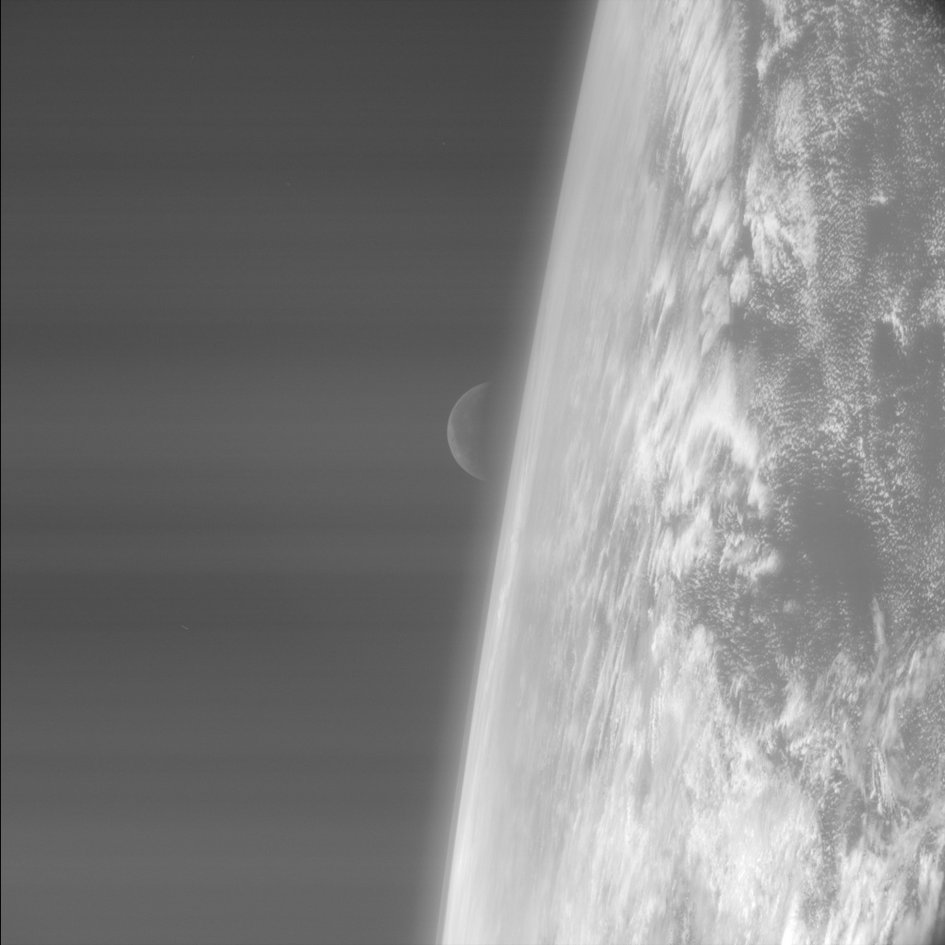
Credit: NASA/Johns Hopkins University Applied Physics Laboratory/Southwest Research Institute
The Mountainous Shoreline of Sputnik Planum
Release Date: December 4, 2015
Keywords: LORRI, Pluto
Join the CompressiveSensing subreddit or the Google+ Community or the Facebook page and post there !
Liked this entry ? subscribe to Nuit Blanche's feed, there's more where that came from. You can also subscribe to Nuit Blanche by Email, explore the Big Picture in Compressive Sensing or the Matrix Factorization Jungle and join the conversations on compressive sensing, advanced matrix factorization and calibration issues on Linkedin.

Thursday, December 03, 2015

Unlabeled Sensing with Random Linear Measurements

From the introduction:

Unlabeled sensing has potential applications in a number of different fields. Consider the following example. You are blindfolded in a room, and the floor is not flat but a 3 dimensional terrain model. You can sample the height, but you dont know where you take the samples. Is it possible, under some assumption about the terrain model, to recover the location of the samples and the shape of the terrain? This is related to a celebrated problem in robotics called simultaneous location and mapping (SLAM) [8]. Similar data-association problems also arise in the task of assigning observations to targets in multi-target tracking problems that arise in radar applications [9]. More generally, consider the problem of reconstructing a spatial field from samples. Let x denote the representation of the field in some K-dimensional basis. Each measurement can be interpreted as an inner product of x with a “sampling vector” unique to the location where the sample was taken. Consider a mobile sensing scheme [10, 11] where a moving sensor samples the field at N different locations. Further suppose that the mobile sensor does not have access to accurate spatial measurements, although the set of M potential sampling locations and the sampling vectors corresponding to the potential locations are known a priori. The field reconstruction problem one faces in this situation is precisely the unlabeled sensing problem studied in this paper. A similar situation arises in time-domain sampling in the presence of clock jitter [12] which makes it impossible to associate sampled observations to the correct time indices. There is some prior work on reconstruction of bandlimited signals from samples at unknown locations. In [13] an approximate solution to this problem is proposed under the setting of continuous-time measurements and bandlimited signals. In [14], an iterative procedure to reconstruct discrete-time bandlimited signals is proposed. Our work differs from that of these papers in that we do not restrict ourselves to a bandlimited signal model. Our main results are focused on the setting in which the sampling vectors are randomly distributed. In such settings we show that an exact solution to the unlabeled sensing problem is possible when we take twice as many samples as required in classic labeled sensing.
Enjoy the paper:
Unlabeled Sensing with Random Linear Measurements by Jayakrishnan Unnikrishnan, Saeid Haghighatshoar, Martin Vetterli

We study the problem of solving a linear sensing system when the observations are unlabeled. Specifically we seek a solution to a linear system of equations y = Ax when the order of the observations in the vector y is unknown. Focusing on the setting in which A is a random matrix with i.i.d. entries, we show that if the sensing matrix A admits an oversampling ratio of 2 or higher, then with probability 1 it is possible to recover x exactly without the knowledge of the order of the observations in y. Furthermore, if x is of dimension K, then any 2K entries of y are sufficient to recover x. This result implies the existence of deterministic unlabeled sensing matrices with an oversampling factor of 2 that admit perfect reconstruction. The result is universal in that recovery is guaranteed for all possible choices of x. While the proof is constructive, it uses a combinatorial algorithm which is not practical, leaving the question of complexity open. We also analyze a noisy version of the problem and show that local stability is guaranteed by the solution. In particular, for every x, the recovery error tends to zero as the signal-to-noise-ratio tends to infinity. The question of universal stability is unclear. We also obtain a converse of the result in the noiseless case: If the number of observations in y is less than 2K, then with probability 1, universal recovery fails, i.e., with probability 1, there exists distinct choices of x which lead to the same unordered list of observations in y. In terms of applications, the unlabeled sensing problem is related to data association problems encountered in different domains including robotics where it is appears in a method called "simultaneous localization and mapping" (SLAM), multi-target tracking applications, and in sampling signals in the presence of jitter.


Join the CompressiveSensing subreddit or the Google+ Community or the Facebook page and post there !
Liked this entry ? subscribe to Nuit Blanche's feed, there's more where that came from. You can also subscribe to Nuit Blanche by Email, explore the Big Picture in Compressive Sensing or the Matrix Factorization Jungle and join the conversations on compressive sensing, advanced matrix factorization and calibration issues on Linkedin.

Wednesday, December 02, 2015

Job: PhD studentships and maybe a postdoc, Iowa State University

Namrata just let me know of the following opportunities in her group (for those interested in osting similar job opportunities, do not hesitate to post those on the Compressive Sensing group on LinkedIn with its 3400+ members, also most job entries on Nuit Blanche are collected under the csjob tag)
 

Prof. Namrata Vaswani (http://www.ece.iastate.edu/~namrata/)  Looking for Multiple Ph.D. students for Spring or Fall 2016

Prof. Namrata Vaswani (http://www.ece.iastate.edu/~namrata/)  is looking for multiple Ph.D. students for Spring or Fall 2016. Students with Bachelors or Masters in Electrical or Electrical and Computer Engineering (EE or ECE) or in Mathematics or Applied Mathematics and who have a strong background in linear algebra and probability (undergrad level probability taught in an EE or Math program is enough) are encouraged to apply. Other desirable skills include: (a) the interest and ability to work hard, (b) the ability to think independently, (c) the ability to write well (mathematically).

Her research is in statistical machine learning, data science and signal and information processing. In recent years, her group has worked on developing and analyzing online algorithms for various high-dimensional structured data recovery problems such as online sparse matrix recovery (recursive recovery of sparse vector sequences) or dynamic compressed sensing, online robust principal components' analysis (PCA) and online matrix completion, sparse PCA etc. For more details, see http://www.ece.iastate.edu/~namrata/Summary/index.html

Please email her at namrata@iastate.edu  with the subject line `graduate student applicant'. Please attach a copy of your resume and your transcripts (scanned or unofficial is fine).
Credit: ESA, Rosetta, 1st Earth flyby
Join the CompressiveSensing subreddit or the Google+ Community or the Facebook page and post there !
Liked this entry ? subscribe to Nuit Blanche's feed, there's more where that came from. You can also subscribe to Nuit Blanche by Email, explore the Big Picture in Compressive Sensing or the Matrix Factorization Jungle and join the conversations on compressive sensing, advanced matrix factorization and calibration issues on Linkedin.

Universality laws for randomized dimension reduction, with applications

It's been mentioned by a few of you, Giuseppe being the first (thanks !)


Universality laws for randomized dimension reduction, with applications by Samet Oymak, Joel A. Tropp

Dimension reduction is the process of embedding high-dimensional data into a lower dimensional space to facilitate its analysis. In the Euclidean setting, one fundamental technique for dimension reduction is to apply a random linear map to the data. This dimension reduction procedure succeeds when it preserves certain geometric features of the set. The question is how large the embedding dimension must be to ensure that randomized dimension reduction succeeds with high probability.
This paper studies a natural family of randomized dimension reduction maps and a large class of data sets. It proves that there is a phase transition in the success probability of the dimension reduction map as the embedding dimension increases. For a given data set, the location of the phase transition is the same for all maps in this family. Furthermore, each map has the same stability properties, as quantified through the restricted minimum singular value. These results can be viewed as new universality laws in high-dimensional stochastic geometry.
Universality laws for randomized dimension reduction have many applications in applied mathematics, signal processing, and statistics. They yield design principles for numerical linear algebra algorithms, for compressed sensing measurement ensembles, and for random linear codes. Furthermore, these results have implications for the performance of statistical estimation methods under a large class of random experimental designs.
 
Join the CompressiveSensing subreddit or the Google+ Community or the Facebook page and post there !
Liked this entry ? subscribe to Nuit Blanche's feed, there's more where that came from. You can also subscribe to Nuit Blanche by Email, explore the Big Picture in Compressive Sensing or the Matrix Factorization Jungle and join the conversations on compressive sensing, advanced matrix factorization and calibration issues on Linkedin.

Tuesday, December 01, 2015

Thesis: High-Dimensional Big Data Processing with Dictionary Learning and Diffusion Maps by Aviv Rotbart

 
Algorithms for modern Big Data analysis deal with both massive amount of samples and a large number of features (high-dimension). One way to cope with these challenges is to assume and discover the existence of localization in the data by uncovering its intrinsic geometry. This approach suggests that different data segments can be analyzed separately and then unified in order to gain an understanding of the whole phenomenon. Methods that utilize efficiently localized data are attractive for high-dimensional big data analysis, because they can be parallelized, and thus the computational resources, which are needed for their utilization, are realistic and affordable. These methods can explore local properties such as intrinsic dimension that vary among different pieces of data. This thesis presents two different methods to locally analyze large datasets for classification, clustering and anomaly detection. The first method localizes dictionary learning based on matrix factorization techniques. We utilize randomized LU decomposition and QR-decomposition algorithms to build dictionaries that describe different types of data. Then, these dictionaries are used to assign new samples to their respective class. One application in cyber security deals with learning of computer files and detecting executable code hidden in PDF files. In a different application, a dictionary learned from a normally behaving computer network data is used to detect anomalies in test data which may imply a cyber threat. 
The second method is localized diffusion process (LDP), which constitutes a coarse-graining of the classic Diffusion Maps algorithm. In LDP, a Markov walk is calculated on small data point clouds instead of the original data points. This work establishes a theoretical foundation for the Localized Diffusion Folders for hierarchical data analysis.
 
 
Join the CompressiveSensing subreddit or the Google+ Community or the Facebook page and post there !
Liked this entry ? subscribe to Nuit Blanche's feed, there's more where that came from. You can also subscribe to Nuit Blanche by Email, explore the Big Picture in Compressive Sensing or the Matrix Factorization Jungle and join the conversations on compressive sensing, advanced matrix factorization and calibration issues on Linkedin.

Book: Convex Optimization: Algorithms and Complexity, Sébastien Bubeck

Sébastien Bubeck mentioned it on his blog here is his new introduction to convex optimization entitled:  Convex Optimization: Algorithms and Complexity", 

Abstract
This monograph presents the main complexity theorems in convex optimization and their corresponding algorithms. Starting from the fundamental theory of black-box optimization, the material progresses towards recent advances in structural optimization and stochastic optimization. Our presentation of black-box optimization, strongly influenced by Nesterov’s seminal book and Nemirovski’s lecture notes, includes the analysis of cutting plane methods, as well as (accelerated) gradient descent schemes. We also pay special attention to non- Euclidean settings (relevant algorithms include Frank-Wolfe, mirror descent, and dual averaging) and discuss their relevance in machine learning. We provide a gentle introduction to structural optimization with FISTA (to optimize a sum of a smooth and a simple non-smooth term), saddle-point mirror prox (Nemirovski’s alternative to Nesterov’s smoothing), and a concise description of interior point methods. In stochastic optimization we discuss stochastic gradient descent, minibatches, random coordinate descent, and sublinear algorithms. We also briefly touch upon convex relaxation of combinatorial problems and the use of randomness to round solutions, as well as random walks based methods.

 
Join the CompressiveSensing subreddit or the Google+ Community or the Facebook page and post there !
Liked this entry ? subscribe to Nuit Blanche's feed, there's more where that came from. You can also subscribe to Nuit Blanche by Email, explore the Big Picture in Compressive Sensing or the Matrix Factorization Jungle and join the conversations on compressive sensing, advanced matrix factorization and calibration issues on Linkedin.

Printfriendly