Friday, September 20, 2013

Video: Paris Machine Learning Meetup #3

Tuesday's Paris Machine Learning Meetup #3 went very well. Thank you to Frederick Demback and his crew who welcomed us at DojoEvents. Guillaume Pellerin kindly provided the TC-202 Case to record the three talks and put them on YouTube. In all, about 70 people showed up out of 120 who had registered.

Because of the heterogeneity of the group, Franck and I decided to start with a brief 20 minutes overview of Machine Learning. This presentation was followed with two interesting talks on scikit-learn and its use to classify fMRI events for mind reading. The talks were in French but the presentations slides are in English.


During Gaël's and Alexandre's talks. we stumbled upon the issue of what it meant to be brain dead. I think we need to see a talk on that subject. In effect, the underlying question revolves around the following issue: what sort of algorithm can make sense of low level conscience and no conscience at all with noisy measurements. I also did not realize that the data from Gallant's lab at Berkeley test mentioned earlier here was not publicly available.  As an aside, it is also interesting to note that there seems to be little competition taking place to get better reconstruction results from datasets that have already been gathered as in the case of data from [3] featured in the video below. Alexandre showed us an awesome reconstruction using scikit-learn using many fewer lines of codes than the original attempt [3]. In retrospect, the situation looks very similar to what took place in the initial development of sparse coding/dictionary learning algorithms. While in 1996 [4] it took several hours to get results, much faster algorithms have since surfaced providing better reconstructions as well.  As aside, I loved the use of IPython.


Gaël  and Alexandre's talks lasted a full hour and twenty minutes in all, far more than the scheduled 40 minutes. Thank you to them for being good sports while fielding our long stream of questions. 

As an aide, at the end of the first talk, I was asked about what I meant about french specific datasets. One person rightly mentioned cultural biased datasets. I also meant to encompass subject areas that only local folks care for or would try to spend some time cracking. I gave a not-so-optimal example but here are four that I have thought about since:
  • AFFELNET, the algorithm used by the each state's education office to assign students to different high school. Most parents are interested in figuring out how it really works. 
  • Price index for appartments in Paris:
You think you know some interesting time series, here is one, the price index for appartment in Paris from 1200 till 2013 [1,2]


there you can read explanation for trends like this one:

The decrease in years 1350-1450 compared to years 1200-1350 might have been caused by the Hundred Year’s War and the Black Plague, the increase from 1450 to 1550 by the return to relative peace, the pause in 1550-1600 by the Wars of Religion, and the following steep rise by the return to relative peace as well as the residence of French kings in the capital, but these are mere speculations.
Here's something you don't hear that everyday: an explanation for pricing time series fluctuations  and how they are influenced by the Black Plague.
  • TV programs
It is the same all around the world but one wonders if there an ML type of analysis undertaken by the different TV companies to evaluate how US TV series re-runs compete against more expensive local productions.
  • Learning analytics: 
This one is culturally biased for sure especially when it comes to learning the language.

Other smaller discussions after the presentations included a connection between imaging and Machine Learning (Sunday Morning Insight: A Quick Panorama of Sensing from Direct Imaging to Machine Learning), the use of count-min (see Muthu's count-min sketch & its applications page) and other sketches in the data streaming model (Sketching data structures), the series of amazing videos from GenomeTV (some selected pieces can be found here) and Moore's law.


[1] Comparing Four Secular Home Price Indices Jacques Friggit, Working paper, version 9, June 2008 , from House Prices in France : Property Price Index, French Real Estate Market Trends, 1200-201326/08/2013
[3] Visual Image Reconstruction from Human Brain Activity using a Combination of Multiscale Local Image Decoders, Yoichi Miyawaki,Hajime Uchida,Okito Yamashita,Masa-aki Sato,Yusuke Morito,Hiroki C. Tanabe,Norihiro Sadato,Yukiyasu Kamitani
[4] Emergence of Simple-Cell Receptive Field Properties by Learning a Sparse Code for Natural Images, Olshausen BA, Field DJ (1996). Nature, 381: 607-609. reprint (pdf) | abstract

Thursday, September 19, 2013

Sparse and Functional Principal Components Analysis - implementation -

Here is a new generalized PCA implementation of note:

Sparse and Functional Principal Components Analysis by Genevera I. Allen

Regularized principal components analysis, especially Sparse PCA and Functional PCA, has become widely used for dimension reduction in high-dimensional settings. Many examples of massive data, however, may benefit from estimating both sparse AND functional factors. These include neuroimaging data where there are discrete brain regions of activation (sparsity) but these regions tend to be smooth spatially (functional). Here, we introduce an optimization framework that can encourage both sparsity and smoothness of the row and/or column PCA factors. This framework generalizes many of the existing approaches to Sparse PCA, Functional PCA and two-way Sparse PCA and Functional PCA, as these are all special cases of our method. In particular, our method permits flexible combinations of sparsity and smoothness that lead to improvements in feature selection and signal recovery as well as more interpretable PCA factors. We demonstrate our method on simulated data and a neuroimaging example on EEG data. This work provides a unified framework for regularized PCA that can form the foundation for a cohesive approach to regularization in high-dimensional multivariate analysis.
The code for the FSPCA is available here which will be shortly added to the Advanced Matrix Factorization page.


Join the CompressiveSensing subreddit or the Google+ Community and post there !
Liked this entry ? subscribe to Nuit Blanche's feed, there's more where that came from. You can also subscribe to Nuit Blanche by Email, explore the Big Picture in Compressive Sensing or the Matrix Factorization Jungle and join the conversations on compressive sensing, advanced matrix factorization and calibration issues on Linkedin.

Wednesday, September 18, 2013

HTOpt: Optimization on the Hierarchical Tucker manifold - applications to tensor completion -implementation -

Curt Da Silva just sent me the following:

Hey Igor,

My name is Curt Da Silva and I am a PhD student in Math at the University of British Columbia under the supervision of Felix Herrmann. I am writing as a follow up to my email a couple of months ago about Hierarchical Tucker tensor optimization/interpolation. I'm happy to say that we've finished our full preprint which is available at ttps://www.slim.eos.ubc.ca/Publications/Public/TechReport/2013/dasilva2013htuck/dasilva2013htuck.pdf and a Matlab implementation of our software, called HTOpt, is available for download (free registration is required to download the software) at https://www.slim.eos.ubc.ca/SoftwareLicensed/ . Thank you for your consideration.

Sincerely,
Curt.
Thanks Curt !


I wonder if this Hierarchical Tucker manifold decomposition is stable (one of the reason the TT-Toolbox), here is the paper: Optimization on the Hierarchical Tucker manifold - applications to tensor completion by Curt Da Silva Felix J. Herrmann. The abstract reads:
In this work, we develop an optimization framework for problems whose solutions are well-approximated by Hierarchical Tucker (HT) tensors, an efficient structured tensor format based on recursive subspace factorizations. By exploiting the smooth manifold structure of these tensors, we construct standard optimization algorithms such as Steepest Descent and Conjugate Gradient for completing tensors from missing entries. Our algorithmic framework is fast and scalable to large problem sizes as we do not require SVDs on the ambient tensor space, as required by other methods. Moreover, we exploit the structure of the Gramian matrices associated with the HT format, which reduces overfitting for high subsampling ratios. We also find that the organization of the tensor can have a major impact on completion from realistic seismic acquisition geometries. These samplings are far from idealized randomized samplings that are usually considered. Using these algorithms, we get good performance on large-scale problems.
 

Join the CompressiveSensing subreddit or the Google+ Community and post there !
Liked this entry ? subscribe to Nuit Blanche's feed, there's more where that came from. You can also subscribe to Nuit Blanche by Email, explore the Big Picture in Compressive Sensing or the Matrix Factorization Jungle and join the conversations on compressive sensing, advanced matrix factorization and calibration issues on Linkedin.

Tuesday, September 17, 2013

Seeking hosts for the next SPARS'15 meeting.

Jalal Fadili sent me the following:

Dear Igor,
In the follow-up of SPARS'13, the SPARS Steering Committee is looking for hosts for the next SPARS meeting.
Would you mind relaying this message again on Nuit Blanche ? Please note that the deadline has been extended to mid-October.
All the best.
Thanks Jalal. Sure, here is the announcement is: 


Dear colleagues,

In the follow-up of the workshop SPARS'13 on Signal Processing with Adaptive/Sparse Representations, the SPARS Steering Committee is looking for hosts for the following SPARS meeting.
The SPARS workshop is expected to run about each 24 months, so the next workshop would most likely be held mid 2015.
(As a past host myself, I know that this is an exciting and rewarding opportunity to make a major contribution to the community!)
If you and/or colleagues would like to host the next workshop, or think this sounds interesting and would like to know more, please send a brief email as an "Expression of Interest" to the new chair of the SPARS Steering Committee, Jalal Fadili <Jalal.Fadili@ensicaen.fr>.
Full details are not required at this stage, but as much of the following information (if known) would be helpful:
* Proposed location / venue
* Names of organizers
* Suggested dates
* Funding strategy
* Other information if available (accommodation options, travel, costs, other special features)
Please send any initial "expressions of interest" by email to Jalal Fadili <Jalal.Fadili@ensicaen.fr> by October 15.

The SPARS Steering Committee will then discuss these expressions of interest and we will get back to you.
In the meantime, if you have any queries, please let me know.
Best wishes,
Rémi Gribonval.
---
Note: the Steering Committee will take the following elements into particular consideration when assessing propositions:
* Format: SPARS is aimed to be a "human size" workshop: not more than 200 participants, one or at most two parallel tracks, and ample time for discussions.
* Student-friendliness: support to students, e.g., through reduced fee and/or travel grants, is expected.
* Abstract 'only': SPARS is primarily intended to be a forum for exchanges at the frontier between applied math and electrical engineering. To accommodate the different publishing cultures of these communities, SPARS13 only requested a mandatory 1-page abstract, but full papers were not required. The organizers of the next edition are free to consider optional proceedings for authors who would wish to provide an extended paper.
* Funding: Bidders should show that they can provide / have applied for a grant to support the organization of the event.
* Accessibility & affordability: ease of access and affordability may be preferred to fancy locations.
* Timing: time conflicts with other sparsity related workshops such as SaMPTA, SPIE Wavelets&Sparsity, etc. should be avoided if possible.
-- 
---------------------------------------------------------------------
Professor in Image and Signal Processing. 
Directeur du GDR MIA |https://fadili.users.greyc.fr/mia/ 
GREYC CNRS UMR 6072 
Ecole Nationale Supérieure d'Ingénieurs de Caen 
6, Bd Marechal Juin, 
14050 Caen Cedex France. 
---------------------------------------------------------------------


Join the CompressiveSensing subreddit or the Google+ Community and post there !
Liked this entry ? subscribe to Nuit Blanche's feed, there's more where that came from. You can also subscribe to Nuit Blanche by Email, explore the Big Picture in Compressive Sensing or the Matrix Factorization Jungle and join the conversations on compressive sensing, advanced matrix factorization and calibration issues on Linkedin.

Ce soir: Paris Machine Learning Meetup #3: Lire dans les pensées grâce à Scikit-learn


[Warning: This is an announcement in French for a Meetup on Machine Learning in Paris tonight and yes, you read right, Champagne and Pizzas are served before the talks, it's Paris after all] 

Pour celles et ceux interesses par le sujet du Machine Learning a Paris, Franck Bardol et moi organisons un meet-up ce soir a DojoEvents, 41 Boulevard Saint-Martin, Paris a 19h00. Si vous etes specialistes ou simplement curieux, inscrivez vous! Si vous ne pouvez pas venir ce soir, Franck et moi pensons que le rendez-vous doit devenir mensuel

Ce soir, nous aurons apres une petite presentation rapide sur ce qu'est le Machine Learning en general (pour les curieux), et nous aurons ensuite deux presentations:

* Scikit-learn: une boite à outils de machine learning, Gaël Varoquaux, Research faculty (CR1), Parietal team, INRIA et Associate researcher, Unicog team (cognitive neuroimaging unit), INSERM

* Lire dans les pensées avec le Scikit-Learn, Alexandre Gramfort, Assistant Professor, Telecom ParisTech

Important: Le champagne et les pizzas sont servis au debut du meet-up!

Monday, September 16, 2013

Slides: ENS/INRIA Visual Recognition and Machine Learning Summer School

This summer also saw another computer vision related school on the other side of the pond:, the ENS/INRIA Visual Recognition and Machine Learning Summer School. From the materials page, here are the presentations slides:
 
Visual Recognition and Machine Learning, 
Summer School,Paris, 22-26 July 2013
 
Materials for practical sessions
  1. Instance-level recognition, Ivan Laptev, Cordelia Schmid, Josef Sivic and Andrew Zisserman
    Monday, July 22, 17.30-19.00
  2. Recognition of Object Categories: Image classification, Ivan Laptev, Cordelia Schmid, Josef Sivic and Andrew Zisserman
    Wednesday, July 24, 16.00-17.30
  3. Recognition of Object Categories: Simple face detector, Ivan Laptev, Cordelia Schmid, Josef Sivic
    Thursday, July 25, 16.00-17.30
Lecture slides
Monday, July 22
  1. Introduction to supervised learning, Christoph Lampert9.15-10.45
  2. Introduction to graphical models, Peter Gehler11.15-12.45
  3. Instance-level recognition (part 1), Cordelia Schmid
    14.00-15.30
  4. Instance-level recognition (part 2), Josef Sivic
    14.00-15.30
  5. Large-scale visual search (part 1), Josef Sivic
    16.00-17.30
  6. Large-scale visual search (part 2), Cordelia Schmid
    16.00-17.30
Tuesday, July 23
  1. Bag-of-Features models for category-level classification, Cordelia Schmid
    9.00-10.30
  2. Deep learning and convolutional neural networks Part 1, Part 2, Yann LeCun
    11.00-12.30
  3. Category-level localization, Andrew Zisserman
    14.00-16.00
Wednesday, July 24
  1. Learning with structured inputs and outputs, Christoph Lampert
    9.00-10.30
  2. Using geometric information in recognition and scene analysis, Martial Hebert
    11.00-12.30
  3. The Three R's of Computer Vision: Recognition, Reconstruction and Reorganization, Jitendra Malik
    14.00-15.30
Thursday, July 25
  1. Large-scale visual recognition, Zaid Harchaoui
    9.00-10.30
  2. Active learning and relative attributes, Kristen Grauman
    11.00-12.30
  3. Discriminative clustering for image co-segmentation, Jean Ponce
    14.00-15.30
Friday, July 26
  1. Visual tracking, Patrick Perez
    9.00-10.30
  2. Human actions, Ivan Laptev
    11.00-12.30
  3. Human vision, Aude Olivia
    14.00-15.30


Join the CompressiveSensing subreddit or the Google+ Community and post there !
Liked this entry ? subscribe to Nuit Blanche's feed, there's more where that came from. You can also subscribe to Nuit Blanche by Email, explore the Big Picture in Compressive Sensing or the Matrix Factorization Jungle and join the conversations on compressive sensing, advanced matrix factorization and calibration issues on Linkedin.

Videos and Slides: IPAM Graduate Summer School: Computer Vision


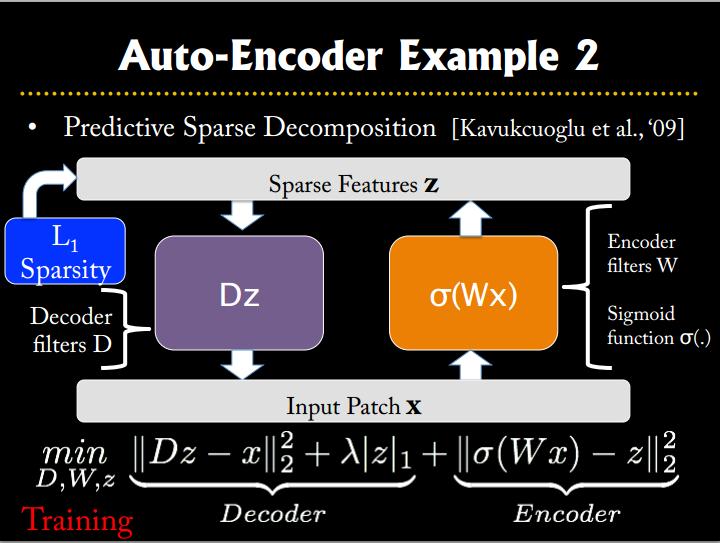
This past Summer, we also had a few schools related to the subject areas mentioned here, this time it was at the IPAM Graduate Summer School on Computer Vision. Here is the program with videos and attendant slides. If you are wondering about the connection between compressive sensing and machine learning here is the entry I wrote a while back on the subject: Sunday Morning Insight: A Quick Panorama of Sensing from Direct Imaging to Machine Learning. The figure above is from Rob Fergus's first presentation. Enjoy!

Monday, July 22, 2013

9:00 - 10:00 Alan Yuille (University of California, Los Angeles (UCLA))
What is Vision and Why is it Hard?
Presentation (PowerPoint File)
video presentation1080p | 480p | 240p |
10:30 - 11:30 Iasonas Kokkinos (École Centrale de Paris)
12:00 - 1:00 Iasonas Kokkinos (École Centrale de Paris)
2:30 - 3:30 Ying Nian Wu (University of California, Los Angeles (UCLA))
4:00 - 5:00 Yuri Boykov (University of Western Ontario)

Tuesday, July 23, 2013

9:00 - 10:00 Mila Nikolova (École Normale Supérieure de Cachan)
10:30 - 11:30 Yuri Boykov (University of Western Ontario)
12:00 - 1:00 Mila Nikolova (École Normale Supérieure de Cachan)
2:30 - 3:30 Yuri Boykov (University of Western Ontario)
4:00 - 5:00 Mila Nikolova (École Normale Supérieure de Cachan)

Wednesday, July 24, 2013

9:00 - 10:00 William Freeman (Massachusetts Institute of Technology)
10:30 - 11:30 William Freeman (Massachusetts Institute of Technology)
12:00 - 1:00 Jason Corso (SUNY Buffalo)
2:30 - 3:30 Yuri Boykov (University of Western Ontario)
4:00 - 5:00 Iasonas Kokkinos (École Centrale de Paris)

Thursday, July 25, 2013

9:00 - 10:00 Iasonas Kokkinos (École Centrale de Paris)
10:30 - 11:30 Jason Corso (SUNY Buffalo)
12:00 - 1:00 Ying Nian Wu (University of California, Los Angeles (UCLA))
2:30 - 3:30 Alan Yuille (University of California, Los Angeles (UCLA))
Brief Introduction to Geometry and Vision
Presentation (PowerPoint File)
video presentation1080p | 480p | 240p |
4:00 - 5:00 Jason Corso (SUNY Buffalo)

Friday, July 26, 2013

9:00 - 10:00 Richard Szeliski (Microsoft Research)
10:30 - 11:30 Richard Szeliski (Microsoft Research)
12:00 - 1:00 Richard Szeliski (Microsoft Research)
2:30 - 3:30 Alan Yuille (University of California, Los Angeles (UCLA))
How to Write a Good Paper
video presentation1080p | 480p | 240p |
4:00 - 5:00 Alan Yuille (University of California, Los Angeles (UCLA))
How to Read a Paper Critically
video presentation1080p | 480p | 240p |

Monday, July 29, 2013

9:00 - 10:00 Daniel Cremers (Technische Universtitat München)
Variational Methods and PDE's for Image Analysis
PDF Presentation
Presentation (PowerPoint File)
video presentation1080p | 480p | 240p |
10:30 - 11:30 Daniel Cremers (Technische Universtitat München)
Convex Optimization and Image Segmentation
PDF Presentation
video presentation1080p | 480p | 240p |
12:00 - 1:00 Richard Korf (University of California, Los Angeles (UCLA))
Heuristic Search I
2:30 - 3:30 Richard Korf (University of California, Los Angeles (UCLA))
Heuristic Search II
4:00 - 5:00 Alan Yuille (University of California, Los Angeles (UCLA))
Search and Vision
PDF Presentation
video presentation1080p | 480p | 240p |

Tuesday, July 30, 2013

9:00 - 10:00 Daniel Cremers (Technische Universtitat München)
Multiple View Reconstruction
PDF Presentation
video presentation1080p | 480p | 240p |
10:30 - 11:30 Daniel Cremers (Technische Universtitat München)
Optical Flow and Dense Correspondence
PDF Presentation
video presentation1080p | 480p | 240p |
12:00 - 1:00 Rob Fergus (New York University)
2:30 - 3:30 Rob Fergus (New York University)
4:00 - 5:00 Rob Fergus (New York University)

Wednesday, July 31, 2013

9:00 - 10:00 Stanley Osher (University of California, Los Angeles (UCLA))
Level Sets and TV-norms
PDF Presentation
10:30 - 11:30 Stanley Osher (University of California, Los Angeles (UCLA))
Split-Bregman
12:00 - 1:00 Ying Nian Wu (University of California, Los Angeles (UCLA))
2:30 - 3:30 Bruno Jedynak (Johns Hopkins University)
4:00 - 5:00 Bruno Jedynak (Johns Hopkins University)

Thursday, August 1, 2013

9:00 - 10:00 David Gu (SUNY Stony Brook)
10:30 - 11:30 David Gu (SUNY Stony Brook)
12:00 - 1:00 Ronen Basri (Weizmann Institute of Science)
2:30 - 3:30 Ronen Basri (Weizmann Institute of Science)
4:00 - 5:00 David Gu (SUNY Stony Brook)

Friday, August 2, 2013

9:00 - 10:00 Raquel Urtasun (Toyota Technological Institute at Chicago)
10:30 - 11:30 Raquel Urtasun (Toyota Technological Institute at Chicago)
12:00 - 1:00 Anand Rangarajan (University of Florida)
2:30 - 3:30 Alan Yuille (University of California, Los Angeles (UCLA))
Adaboost and SVM for object detection
PDF Presentation
video presentation1080p | 480p | 240p |
4:00 - 5:00 Raquel Urtasun (Toyota Technological Institute at Chicago)

Monday, August 5, 2013

9:00 - 10:00 Sparse and Low-Rank Representation Lecture I: Motivation and Theory
10:30 - 11:30 Lecture II: Data Modeling and Applications
12:00 - 1:00 Yi Ma (Microsoft Research Asia)
2:30 - 3:30 Lieven Vandenberghe (University of California, Los Angeles (UCLA))
4:00 - 5:00 Lieven Vandenberghe (University of California, Los Angeles (UCLA))

Tuesday, August 6, 2013

9:00 - 10:00 Anand Rangarajan (University of Florida)
10:30 - 11:30 Iasonas Kokkinos (École Centrale de Paris)
12:00 - 1:00 Fei Sha (University of Southern California (USC))
Dimension Reduction (Part 1)
PDF Presentation
2:30 - 3:30 Fei Sha (University of Southern California (USC))
Manifold Learning (Part 2)
PDF Presentation
4:00 - 5:00 John Wright (Columbia University)

Wednesday, August 7, 2013

9:00 - 10:00 Deva Ramanan (University of California, Irvine (UCI))
Pictorial Structures
PDF Presentation
video presentation1080p | 480p | 240p |
10:30 - 11:30 Iasonas Kokkinos (École Centrale de Paris)
12:00 - 1:00 Martial Hebert (Carnegie-Mellon University)
2:30 - 3:30 Martial Hebert (Carnegie-Mellon University)
4:00 - 5:00 Deva Ramanan (University of California, Irvine (UCI))
Latent SVMs
PDF Presentation
video presentation1080p | 480p | 240p |

Thursday, August 8, 2013

9:00 - 10:00 Deva Ramanan (University of California, Irvine (UCI))
Temporal models for action recognition (HMMs, semi-markov models, CFGs)
PDF Presentation
video presentation1080p | 480p | 240p |
10:30 - 11:30 Martial Hebert (Carnegie-Mellon University)
12:00 - 1:00 Alan Yuille (University of California, Los Angeles (UCLA))
Compositional Models for Vision
PDF Presentation
video presentation1080p | 480p | 240p |
2:30 - 3:30 Sinisa Todorovic (Oregon State University)
4:00 - 5:00 Sinisa Todorovic (Oregon State University)

Friday, August 9, 2013

9:00 - 10:00 Don Geman (Johns Hopkins University)
10:30 - 11:30 Alan Yuille (University of California, Los Angeles (UCLA))
 
video presentation1080p | 480p | 240p |
12:00 - 1:00 Deva Ramanan (University of California, Irvine (UCI))
Future Challenges in Object Recognition
PDF Presentation
video presentation1080p | 480p | 240p |
2:30 - 3:30 Fei Fei Li (Stanford University)
Datasets and Challenges
PDF Presentation
4:00 - 5:00 Don Geman (Johns Hopkins University)


Join the CompressiveSensing subreddit or the Google+ Community and post there !
Liked this entry ? subscribe to Nuit Blanche's feed, there's more where that came from. You can also subscribe to Nuit Blanche by Email, explore the Big Picture in Compressive Sensing or the Matrix Factorization Jungle and join the conversations on compressive sensing, advanced matrix factorization and calibration issues on Linkedin.
Printfriendly