Monday, May 22, 2017

Short and Deep: Sketching and Neural Networks

This is a revised version of an earlier preprint.
Short and Deep: Sketching and Neural Networks by Amit Daniely, Nevena Lazic, Yoram Singer, Kunal Talwar
Data-independent methods for dimensionality reduction such as random projections, sketches, and feature hashing have become increasingly popular in recent years. These methods often seek to reduce dimensionality while preserving the hypothesis class, resulting in inherent lower bounds on the size of projected data. For example, preserving linear separability requires Ω(1/γ2 ) dimensions, where γ is the margin, and in the case of polynomial functions, the number of required dimensions has an exponential dependence on the polynomial degree. Despite these limitations, we show that the dimensionality can be reduced further while maintaining performance guarantees, using improper learning with a slightly larger hypothesis class. In particular, we show that any sparse polynomial function of a sparse binary vector can be computed from a compact sketch by a single-layer neural network, where the sketch size has a logarithmic dependence on the polynomial degree. A practical consequence is that networks trained on sketched data are compact, and therefore suitable for settings with memory and power constraints. We empirically show that our approach leads to networks with fewer parameters than related methods such as feature hashing, at equal or better performance. 


Join the CompressiveSensing subreddit or the Google+ Community or the Facebook page and post there !
Liked this entry ? subscribe to Nuit Blanche's feed, there's more where that came from. You can also subscribe to Nuit Blanche by Email, explore the Big Picture in Compressive Sensing or the Matrix Factorization Jungle and join the conversations on compressive sensing, advanced matrix factorization and calibration issues on Linkedin.

Friday, May 19, 2017

DeepArchitect: Automatically Designing and Training Deep Architectures - implementation -


So now that Learning to Learn is becoming more trendy thanks to Sundar Pichai, we now need better methods to look around for models, because who has 800 GPUs [1] ! Here is one with an implementation, woohoo !

In deep learning, performance is strongly affected by the choice of architecture and hyperparameters. While there has been extensive work on automatic hyperparameter optimization for simple spaces, complex spaces such as the space of deep architectures remain largely unexplored. As a result, the choice of architecture is done manually by the human expert through a slow trial and error process guided mainly by intuition. In this paper we describe a framework for automatically designing and training deep models. We propose an extensible and modular language that allows the human expert to compactly represent complex search spaces over architectures and their hyperparameters. The resulting search spaces are tree-structured and therefore easy to traverse. Models can be automatically compiled to computational graphs once values for all hyperparameters have been chosen. We can leverage the structure of the search space to introduce different model search algorithms, such as random search, Monte Carlo tree search (MCTS), and sequential model-based optimization (SMBO). We present experiments comparing the different algorithms on CIFAR-10 and show that MCTS and SMBO outperform random search. In addition, these experiments show that our framework can be used effectively for model discovery, as it is possible to describe expressive search spaces and discover competitive models without much effort from the human expert. Code for our framework and experiments has been made publicly available.

An implementation of DeepArchitect is here: https://github.com/negrinho/deep_architect

[1] ICLR video: Neural Architecture Search with Reinforcement Learning Video starts at 1:08:44 see Learning the structure of learning.


Join the CompressiveSensing subreddit or the Google+ Community or the Facebook page and post there !

Soft Recovery With General Atomic Norms


This paper describes a dual certificate condition on a linear measurement operator A (defined on a Hilbert space H and having finite-dimensional range) which guarantees that an atomic norm minimization, in a certain sense, will be able to approximately recover a structured signal v0∈H from measurements Av0. Put very streamlined, the condition implies that peaks in a sparse decomposition of v0 are close the the support of the atomic decomposition of the solution v∗. The condition applies in a relatively general context - in particular, the space H can be infinite-dimensional. The abstract framework is applied to several concrete examples, one example being super-resolution. In this process, several novel results which are interesting on its own are obtained.


Join the CompressiveSensing subreddit or the Google+ Community or the Facebook page and post there !
Liked this entry ? subscribe to Nuit Blanche's feed, there's more where that came from. You can also subscribe to Nuit Blanche by Email, explore the Big Picture in Compressive Sensing or the Matrix Factorization Jungle and join the conversations on compressive sensing, advanced matrix factorization and calibration issues on Linkedin.

Thursday, May 18, 2017

Guaranteed recovery of quantum processes from few measurements / Improving compressed sensing with the diamond norm

Jens mentioned this a while back and I am just playing catch-up on this topic before the upcoming massive ArXiv NIPS2017 release. Enjoy !


Guaranteed recovery of quantum processes from few measurements by Martin Kliesch, Richard Kueng, Jens Eisert, David Gross

Quantum process tomography is the task of reconstructing unknown quantum channels from measured data. In this work, we introduce compressed sensing-based methods that facilitate the reconstruction of quantum channels of low Kraus rank. Our main contribution is the analysis of a natural measurement model for this task: We assume that data is obtained by sending pure states into the channel and measuring expectation values on the output. Neither ancilla systems nor coherent operations across multiple channel uses are required. Most previous results on compressed process reconstruction reduce the problem to quantum state tomography on the channel's Choi matrix. While this ansatz yields recovery guarantees from an essentially minimal number of measurements, physical implementations of such schemes would typically involve ancilla systems. A priori, it is unclear whether a measurement model tailored directly to quantum process tomography might require more measurements. We establish that this is not the case. Technically, we prove recovery guarantees for three different reconstruction algorithms. The reconstructions are based on a trace, diamond, and ℓ2-norm minimization, respectively. Our recovery guarantees are uniform in the sense that with one random choice of measurement settings all quantum channels can be recovered equally well. Moreover, stability against arbitrary measurement noise and robustness against violations of the low-rank assumption is guaranteed. Numerical studies demonstrate the feasibility of the approach.  

Improving compressed sensing with the diamond norm by Martin Kliesch, Richard Kueng, Jens Eisert, David Gross
In low-rank matrix recovery, one aims to reconstruct a low-rank matrix from a minimal number of linear measurements. Within the paradigm of compressed sensing, this is made computationally efficient by minimizing the nuclear norm as a convex surrogate for rank.
In this work, we identify an improved regularizer based on the so-called diamond norm, a concept imported from quantum information theory. We show that -for a class of matrices saturating a certain norm inequality- the descent cone of the diamond norm is contained in that of the nuclear norm. This suggests superior reconstruction properties for these matrices. We explicitly characterize this set of matrices. Moreover, we demonstrate numerically that the diamond norm indeed outperforms the nuclear norm in a number of relevant applications: These include signal analysis tasks such as blind matrix deconvolution or the retrieval of certain unitary basis changes, as well as the quantum information problem of process tomography with random measurements.
The diamond norm is defined for matrices that can be interpreted as order-4 tensors and it turns out that the above condition depends crucially on that tensorial structure. In this sense, this work touches on an aspect of the notoriously difficult tensor completion problem.


Join the CompressiveSensing subreddit or the Google+ Community or the Facebook page and post there !
Liked this entry ? subscribe to Nuit Blanche's feed, there's more where that came from. You can also subscribe to Nuit Blanche by Email, explore the Big Picture in Compressive Sensing or the Matrix Factorization Jungle and join the conversations on compressive sensing, advanced matrix factorization and calibration issues on Linkedin.

Wednesday, May 17, 2017

Thesis (Honors): Improved Genomic Selection using VowpalWabbit with Random Fourier Features, Jiaqin Jaslyn Zhang

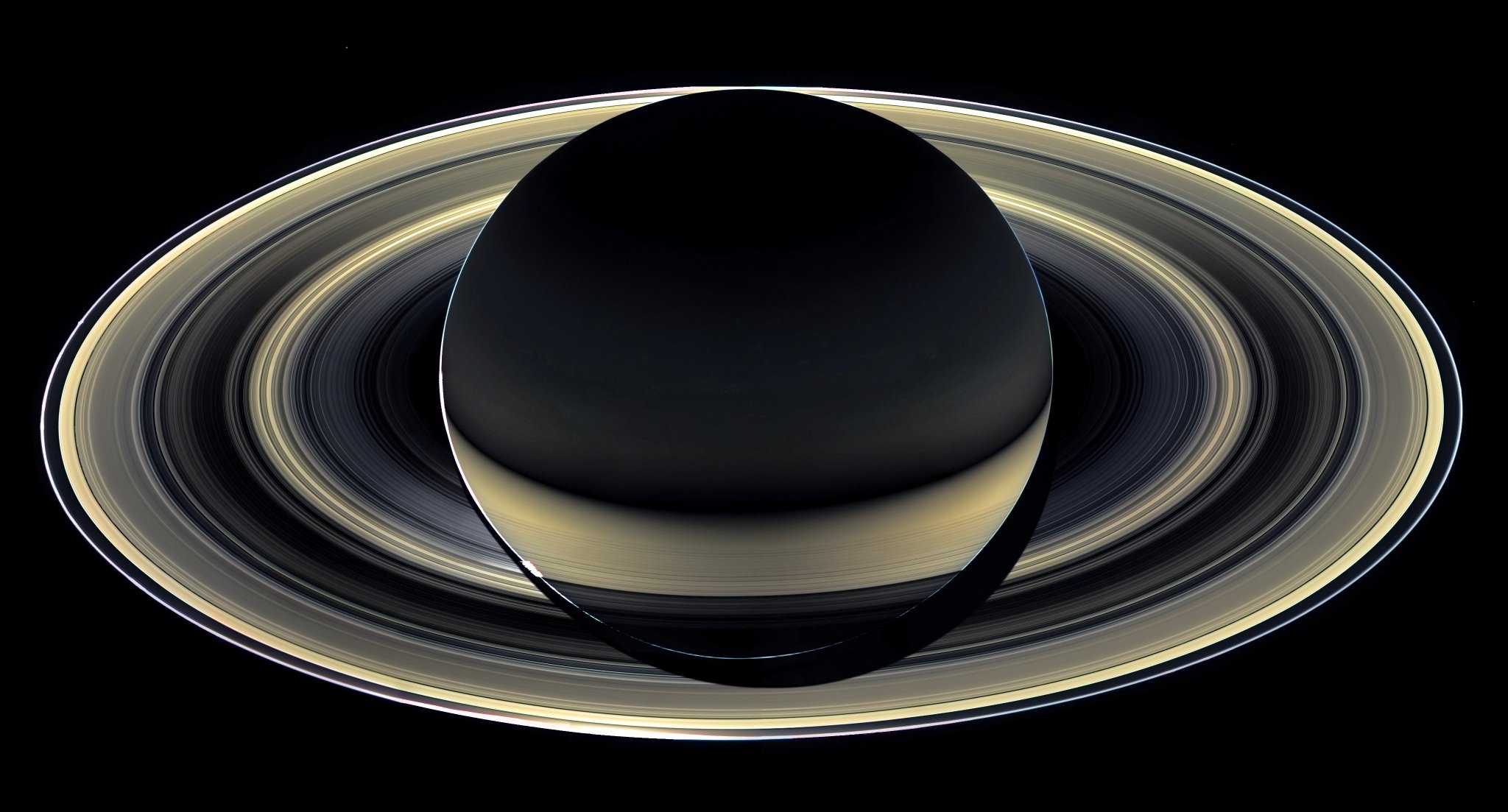
Image Credit: NASA/JPL-Caltech/Space Science Institute, Ian Regan

Combining Random Features and Vowpal Wabbit in this honors thesis. Congratulations Jiaqin !

Improved Genomic Selection using VowpalWabbit with Random Fourier Features by Jiaqin Jaslyn Zhang
Nonlinear regression models are often used in statistics and machine learning due to greater accuracy than linear models. In this work, we present a novel modeling framework that is both computationally efficient for high-dimensional datasets, and predicts more accurately than most of the classic state-of-the-art predictive models. Here, we couple a nonlinear random Fourier feature data transformation with an intrinsically fast learning algorithm called Vowpal Wabbit or VW. The key idea we develop is that by introducing nonlinear structure to an otherwise linear framework, we are able to consider all possible higher-order interactions between entries in a string. The utility of our nonlinear VW extension is examined, in some detail, under an important problem in statistical genetics: genomic selection (i.e. the prediction of phenotype from genotype). We illustrate the benefits of our method and its robustness to underlying genetic architecture on a real dataset, which includes 129 quantitative heterogeneous stock mice traits from the Wellcome Trust Centre for Human Genetics.


Join the CompressiveSensing subreddit or the Google+ Community or the Facebook page and post there !
Liked this entry ? subscribe to Nuit Blanche's feed, there's more where that came from. You can also subscribe to Nuit Blanche by Email, explore the Big Picture in Compressive Sensing or the Matrix Factorization Jungle and join the conversations on compressive sensing, advanced matrix factorization and calibration issues on Linkedin.

Tuesday, May 16, 2017

Thesis: Robust Low-rank and Sparse Decomposition for Moving Object Detection: From Matrices to Tensors by Andrews Cordolino Sobral


Here is what Andrews (whom we have followed for a while now) just sent me (Congratulations Dr. Sobral !)
Hi Igor,

First of all, I would like to congratulate you for your excellent blog.
I would like to share with you my thesis presentation about Robust Low-rank and Sparse Decomposition for Moving Object Detection: From Matrices to Tensors. I think this research work may be of interest to your blog. Please find below the slide presentation and the thesis manuscript:
Thesis presentation (SlideShare):
https://www.slideshare.net/andrewssobral/thesis-presentation-robust-lowrank-and-sparse-decomposition-for-moving-object-detection-from-matrices-to-tensors
Thesis manuscript (ResearchGate):
https://www.researchgate.net/publication/316967304_Robust_Low-rank_and_Sparse_Decomposition_for_Moving_Object_Detection_From_Matrices_to_Tensors
Many thanks,

Andrews Cordolino Sobral
Ph.D. on Computer Vision and Machine Learning
http://andrewssobral.wix.com/home
This thesis introduces the recent advances on decomposition into low-rank plus sparse matrices and tensors, as well as the main contributions to face the principal issues in moving object detection. First, we present an overview of the state-of-the-art methods for low-rank and sparse decomposition, as well as their application to background modeling and foreground segmentation tasks. Next, we address the problem of background model initialization as a reconstruction process from missing/corrupted data. A novel methodology is presented showing an attractive potential for background modeling initialization in video surveillance. Subsequently, we propose a double-constrained version of robust principal component analysis to improve the foreground detection in maritime environments for automated video-surveillance applications. The algorithm makes use of double constraints extracted from spatial saliency maps to enhance object foreground detection in dynamic scenes. We also developed two incremental tensor-based algorithms in order to perform background/foreground separation from multidimensional streaming data. These works address the problem of low-rank and sparse decomposition on tensors. Finally, we present a particular work realized in conjunction with the Computer Vision Center (CVC) at Autonomous University of Barcelona (UAB).


Join the CompressiveSensing subreddit or the Google+ Community or the Facebook page and post there !
Liked this entry ? subscribe to Nuit Blanche's feed, there's more where that came from. You can also subscribe to Nuit Blanche by Email, explore the Big Picture in Compressive Sensing or the Matrix Factorization Jungle and join the conversations on compressive sensing, advanced matrix factorization and calibration issues on Linkedin.

Thesis: Fast Algorithms on Random Matrices and Structured Matrices by Liang Zhao


Congratulations Dr. Zhao !


Fast Algorithms on Random Matrices and Structured Matrices  by Liang Zhao
Randomization of matrix computations has become a hot research area in the big data era. Sampling with randomly generated matrices has enabled fast algorithms to perform well for some most fundamental problems of numerical algebra with probability close to 1. The dissertation develops a set of algorithms with random and structured matrices for the following applications: 1) We prove that using random sparse and structured sampling enables rank-r approximation of the average input matrix having numerical rank r. 2) We prove that Gaussian elimination with no pivoting (GENP) is numerically safe for the average nonsingular and well-conditioned matrix preprocessed with a nonsingular and well-conditioned f-Circulant or another v structured multiplier. This can be an attractive alternative to the customary Gaussian elimination with partial pivoting (GEPP). 3) By using structured matrices of a large family we compress large-scale neural networks while retaining high accuracy. The results of our extensive are in good accordance with those of our theoretical study.


Image Credit: NASA/JPL-Caltech/Space Science Institute
N00281695.jpg was taken on 2017-05-14 19:21 (PDT) and received on Earth 2017-05-15 06:09 (PDT). The camera was pointing toward Saturn-rings, and the image was taken using the CL1 and CL2 filters. 

Join the CompressiveSensing subreddit or the Google+ Community or the Facebook page and post there !

Monday, May 15, 2017

Highly Technical Reference Page: "the GAN Zoo" and "Delving deep into Generative Adversarial Networks (GANs)"

Much like what happened with the Advanced Matrix Factorization Jungle, here is a new Highly Technical Reference page, on a subject of increased interest that is difficult to follow for even a specialist: GANs. 

If you wonder what GANs are, take a look at the tutorial on Generative Adversarial Networks by Ian Goodfellow (and his NIPS slides) or John Glover's entry last August on the subject 'with TF code).


Avinash Hindupur who is behind deephunt.in recently listed the log series of GANs techniques in the GAN Zoo. From the page: 

Every week, new papers on Generative Adversarial Networks (GAN) are coming out and it’s hard to keep track of them all, not to mention the incredibly creative ways in which researchers are naming these GANs! You can read more about GANs in this Generative Models post by OpenAI or this overview tutorial in KDNuggets.

Avinash also mentions that the list can be expanded: 
You can visit the Github repository to add more links via pull requests or create an issue to lemme know something I missed or to start a discussion.
The subject is so hot that there is an earlier and somewhat more complete page on the subject

Delving deep into Generative Adversarial Networks (GANs) by Grigorios Kalliatakis
A curated list of state-of-the-art publications and resources about Generative Adversarial Networks (GANs) and their applications.....

Contributions are welcome !! If you have any suggestions (missing or new papers, missing repos or typos) you can pull a request or start a discussion.

Jobs: Four Engineering positions at NVIDIA

Anita just sent me the following just before GTC2017 and subsequent discussion of their three billion dollars investment in the new chip effort (Tesla V100), the Volta Tensor Unit, Inference optimizers and their new cloud. Looks like the ML Hardware is eating the world !
Hi Igor,


Thanks for posting last time! I really appreciate. I have some other exciting roles I wanted to see if you are interested in posting, including a manager role! Thanks!

Thanks! Best Regards,


Anita Rexinger

NVIDIA Corporation


Join the CompressiveSensing subreddit or the Google+ Community or the Facebook page and post there !
Liked this entry ? subscribe to Nuit Blanche's feed, there's more where that came from. You can also subscribe to Nuit Blanche by Email, explore the Big Picture in Compressive Sensing or the Matrix Factorization Jungle and join the conversations on compressive sensing, advanced matrix factorization and calibration issues on Linkedin.

Friday, May 12, 2017

Speckle-based hyperspectral imaging combining multiple scattering and compressive sensing in nanowire mats

The paper has been pusblished but it was also just put on arxiv since Optics Letters is a Romeo green journal and allows preprints and even postprints to be archived. Enjoy !


Encoding of spectral information onto monochrome imaging cameras is of interest for wavelength multiplexing and hyperspectral imaging applications. Here, the complex spatio-spectral response of a disordered material is used to demonstrate retrieval of a number of discrete wavelengths over a wide spectral range. Strong, diffuse light scattering in a semiconductor nanowire mat is used to achieve a highly compact spectrometer of micrometer thickness, transforming different wavelengths into distinct speckle patterns with nanometer sensitivity. Spatial multiplexing is achieved through the use of a microlens array, allowing simultaneous imaging of many speckles, ultimately limited by the size of the diffuse spot area. The performance of different information retrieval algorithms is compared. A compressive sensing algorithm exhibits efficient reconstruction capability in noisy environments and with only a few measurements.


Join the CompressiveSensing subreddit or the Google+ Community or the Facebook page and post there !
Liked this entry ? subscribe to Nuit Blanche's feed, there's more where that came from. You can also subscribe to Nuit Blanche by Email, explore the Big Picture in Compressive Sensing or the Matrix Factorization Jungle and join the conversations on compressive sensing, advanced matrix factorization and calibration issues on Linkedin.

Printfriendly