Wednesday, October 19, 2011

A Q&A with Marco Duarte and Dror Baron

In yesterday's entry ( Can Netflix give you Superman's X-ray vision ?) Emmanuel Candes, Thomas Strohmer and Vladislav Voroninski were featuring the reconstruction of a signal with few measurements without the need to resort to sparsity. In a similar but different direction, two weeks ago, I mentioned the work of Dror Baron and  Marco Duarte entitled Universal MAP Estimation in Compressed Sensing and was intrigued about how one could perform also compressed sensing without a sparsity argument. I went ahead and struck a conversation with Dror and  Marco who were good sports about it since I usually ask a lot of dumb questions. Here is the summary of our back and forth exchange.   

Me:
While I am reading your paper, I cannot take out of my head that somehow Compressive Sensing already deals with non sparse but "low complexity" signals through the use of judicious dictionaries in the reconstruction stage. Isn't the dictionary some sort of low complexity vectors? What do you guys think?

 Marco:

If you mean that signals that are not necessarily themselves sparse may be sparse given that one picks the right basis/dictionary (like DCT/wavelets for images, for example), then I think the clear contrast between that baseline setup and us is that in the baseline setup you would need to know the basis/dictionary a priori, e.g. before you attempt to recover the signal.

Our approach is fundamentally different because it does not use sparsity as a measure of complexity. Rather, it is assumed that the signal is drawn from an ergodic source, and the source statistics and signal (realization of the source) are jointly estimated iteratively - a given estimate of the signal allows us to build an estimate of the source statistics, and then the statistics allow us to further refine the signal estimate. Such a process can be repeated to satisfaction.
The equivalent in sparsity-based CS would be to try to estimate the signal and the basis/dictionary that yields sparsity simultaneously; this approach has been considered and addressed (so far) only when you have a very large number of sufficiently diverse set of signals under observation that are sparse in the basis/dictionary. These approaches then integrate dictionary learning with sparse recovery.
Me

Then, isn't this dictionary learning, A = DX find D dictionary and a sparse X, how is your approach changing that problematic? 
 Marco and Dror:


We're different because we don't use sparsity as a measure of complexity; we use the notion of Kolmogorov complexity instead, which is approximated in our algorithm by empirical entropy. Standard CS aims for the sparsest signal representation that agrees with the measurements; we aim for the signal with simplest source statistics (lowest empirical entropy) that agrees with the measurements. As a byproduct of optimizing for minimum complexity, we estimate the source statistics. Therefore, there is no need to assume knowledge of the signal prior as in Bayesian methods; at the same time, our reconstruction performance is as good as (superior) Bayesian reconstruction for any signal despite not knowing its statistics. Keeping in mind that any type of sparsity examined so far in the literature relies on an independent and identically distributed (i.i.d.) signal assumption, our algorithm should reconstruct as well as any existing sparsity-based solvers.
In contrast, you could think of dictionary learning as estimating a sparse representation for each signal observed and getting the dictionary as a byproduct.
Dror:
The way I understand dictionary learning, using training data they try to find D such that x=D*c is represented with c being as "sparse" as possible over the ensemble of training data, where sparsity is measured by energy compaction or some other metric.
The *limitation* of current dictionary learning methods that we're aware of is that the metric used to induce sparsity implies that the entries of c are i.i.d. An i.i.d. assumption might be plausible in some scenarios, but less so in others. For example, the example we used in Figure 1 in our paper shows strong statistical dependencies between samples of the unknown input x, but to the best of our knowledge x cannot be represented as sparse in any fixed dictionary D. Here we have a type of signal who's statistical structure is not covered by the prior art.
Keep also in mind that dictionaries could be used within our setting, and we could try to estimate the Kolmogorov complexity of the vector c. It would require some changes to the algorithm, but in principle this can be done.
Me:
OK, thanks. Now, I am also trying to draw a mental picture of how successive improvements in compressive sensing have led better empirical bounds on the number of measurements required for reconstruction over time. 
Initially, with solvers like least squares and no assumption on the measurement ensemble (measurement matrices), our world was basically divided into underdetermined and overdetermined linear systems of equations with an over emphasis toward exactly square systems (at least in many engineering fields such as mechanical, fluid, nuclear,.....). 
With compressive sensing, making an assumption on the solution (sparsity) and some assumption on the measurement ensembles (Gaussian, Bernoulli,...) one can find some solution in polynomial time in the underdetermined territory. 
Specialists, however, have a better domain knowledge of their respective fields and know that their signals are not just sparse. Structured sparsity, model based compressive sensing or low information solutions (in your case) seem to be newer assumptions to be used in underdetermined systems.Given all this, do we have a clear view on the respective measurement ensembles that allow polynomial solutions of these underdetermined systems with these new constraints and solvers?
Dror
In our case, virtually any ensemble of random matrices (except those with low entropy) should work with high probability in the limit of large matrices. Our proofs are for Gaussian matrices. Our algorithm doesn't really make any assumptions.
Marco


This is a very interesting common thread between the examples you give. The use of least squares is not really assuming anything about the matrix, but rather only about the signal (that it has least energy among all possible inputs that match the output). The compressed sensing efforts that you describe after that have posed conditions on both the matrix and the signal model, and most (if not all) of these conditions have been reduced to random matrix designs, even though the way we arrive at randomness might be very different in each case. It is certainly very different for our universal approach and for the RIP-based approach, for example.


Thanks Dror and Marco, I think I am less dumb as a result of this discussion.


Image Credit: NASA/JPL/Space Science Institute. N00177178.jpg was taken on October 01, 2011 and received on Earth October 02, 2011. The camera was pointing toward ENCELADUS at approximately 107,084 kilometers away, and the image was taken using the BL1 and CL2 filters. This image has not been validated or calibrated. A validated/calibrated image will be archived with the NASA Planetary Data System in 2012.


Tuesday, October 18, 2011

Can Netflix give you Superman's X-ray vision ?


In If there is revolution in rank minimization and nobody hears about it, is this a revolution ?, I listed a set of the different proxies for the rank functional. Vicente Malave kindly mentioned the following:
Another norm with some good theoretical and empirical improvement (matrix completion / netflix type problems) over the nuclear norm is the max norm, which has gotten attention mostly through the work of Nati Srebro .
Thanks Vicente, I nearly forgot about that one, most probably because I have not seen any implementation of it anywhere. The following paper [1] provides some good background as to why the max-norm is potentially interesting. 


But in the end, why should we care about this flurry of proxies? sure everybody gets famous writing the latest and greatest paper on how they improved their Netflix RSME...a little too late. I mean really, what's the point of all this ? Doing better Boogie-Boogie Jam-Jam collaborative filtering systems, maybe ? Call me a dreamer, but these other proxies are important because they might provide us with better bounds on the lower number of measurements needed to reconstruct signals when phase information is lost. Right now, the PhaseLift [2] approach tells us that the number of measurements is 3n for 1D signals in the noiseless case. This approach makes absolutely no argument on the sparsity of the signal is used. What if it did ? The authors finish their paper with:


.....At the theoretical level, we need to understand for which families of physically implementable structured illuminations does the trace-norm heuristic succeed?[My emphasis] How many diffraction patterns are provably sufficient for our convex programming approach to work? Also, we have shown that our approach is robust to noise in the sense that the performance degrades very gracefully as the SNR decreases. Can this be made rigorous? Can we prove that our proposed framework is indeed robust to noise? Here, it is very likely that the tools and ideas developed in the theories of compressed sensing and of matrix completion will play a key role in addressing these fundamental issues....

In effect, the proxies may have some importance on the type of probing illumination used and their instantiation through actual hardware development. Forget your Netflix RMSE score, this is important.

We consider the problem of approximately reconstructing a partially-observed, approximately low-rank matrix. This problem has received much attention lately, mostly using the trace-norm as a surrogate to the rank. Here we study low-rank matrix reconstruction using both the trace-norm, as well as the less-studied max-norm, and present reconstruction guarantees based on existing analysis on the Rademacher complexity of the unit balls of these norms. We show how these are superior in several ways to recently published guarantees based on specialized analysis.
[2] PhaseLift: Exact and Stable Signal Recovery from Magnitude Measurements via Convex Programming
Emmanuel J. Candes, Thomas Strohmer and Vladislav Voroninski.

Monday, October 17, 2011

This Week in Compressive Sensing


Today, we have a pretty rich entry, enjoy: Regime Change: Bit-Depth versus Measurement-Rate in Compressive Sensing by Jason N. Laska and Richard G. Baraniuk. The abstract reads:
The recently introduced compressive sensing (CS) framework enables digital signal acquisition systems to take advantage of signal structures beyond bandlimitedness. Indeed, the number of CS measurements required for stable reconstruction is closer to the order of the signal complexity than the Nyquist rate. To date, the CS theory has focused on real-valued measurements, but in practice, measurements are mapped to bits from a finite alphabet. Moreover, in many potential applications the total number of measurement bits is constrained, which suggests a tradeo ff between the number of measurements and the number of bits per measurement. We study this situation in this paper and show that there exist two distinct regimes of operation that correspond to high/low signal-to-noise ratio (SNR). In the measurement compression (MC) regime, a high SNR favors acquiring fewer measurements with more bits per measurement; in the quantization compression (QC) regime, a low SNR favors acquiring more measurements with fewer bits per measurement. A surprise from our analysis and experiments is that in many practical applications it is better to operate in the QC regime, even acquiring as few as 1 bit per measurement.


Rich has more on his blog.


We consider the sparse Fourier transform problem: given a complex vector x of length n, and a parameter k, estimate the k largest (in magnitude) coefficients of the Fourier transform of x. The problem is of key interest in several areas, including signal processing, audio/image/video compression, and learning theory. We propose a new algorithm for this problem. The algorithm leverages techniques from digital signal processing, notably Gaussian and Dolph-Chebyshev filters. Unlike the typical approach to this problem, our algorithm is not iterative. That is, instead of estimating “large” coefficients, subtracting them and recursing on the reminder, it identifies and estimates the k largest coefficients in “one shot”, in a manner akin to sketching/streaming algorithms. The resulting algorithm is structurally simpler than its predecessors. As a consequence, we are able to extend considerably the range of sparsity, k, for which the algorithm is faster than FFT, both in theory and practice.


Dina tells me that they have plans to release the code. Stay tuned.


Inspired by the theory of compressed sensing and employing random channel access, we propose a distributed energy-efficient sensor network scheme denoted by Random Access Compressed Sensing (RACS). The proposed scheme is suitable for long-term deployment of large underwater networks, in which saving energy and bandwidth is of crucial importance. During each frame, a randomly chosen subset of nodes participate in the sensing process, then share the channel using random access. Due to the nature of random access, packets may collide at the fusion center. To account for the packet loss that occurs due to collisions, the network design employs the concept of sufficient sensing probability. With this probability, sufficiently many data packets – as required for field reconstruction based on compressed sensing – are to be received. The RACS scheme prolongs network life-time while employing a simple and distributed scheme which eliminates the need for scheduling.

Following our previous study on compressed sensing for ultrasound imaging, this paper proposes to exploit the image sparsity in the frequency domain within a Bayesian approach. A Bernoulli-Gaussian prior is assigned to the Fourier transform of the ultrasound image in order to enforce sparsity and to reconstruct the image via Bayesian compressed sensing. In addition, the Bayesian approach allows the image sparsity level in the spectral domain to be estimated, a significant parameter in the ℓ1 constrained minimization problem related to compressed sensing. Results obtained with a simulated ultrasound image and an in vivo image of a human thyroid gland show a reconstruction performance similar to a classical compressed sensing algorithm from half of spatial samples while estimating the sparsity level during reconstruction.

A novel approach has been developed to reconstruct the Hyperspectral images from very few number of noisy compressive measurements. Our reconstruction approach is based on a convex minimization which penalizes both the nuclear norm and the `2;1 mixed-norm of the data matrix. Thus, the solution tends to have a simultaneously low-rank and joint-sparse structure. We explain how these two assumptions fit the Hyperspectral data, and by severals simulations we show that our proposed reconstruction scheme significantly enhances the state-of-the-art tradeoffs between the reconstruction error and the required number of CS measurements.


This paper presents a novel power spectral density estimation technique for bandlimited, wide-sense stationary signals from sub-Nyquist sampled data. The technique employs multi-coset sampling and applies to spectrally sparse and nonsparse power spectra alike. For sparse density functions, we apply compressed sensing theory and the resulting compressive estimates exhibit better tradeoffs among the estimator's resolution, system complexity, and average sampling rate compared to their noncompressive counterparts. Both compressive and noncompressive estimates, however, can be computed at arbitrarily low sampling rates. The estimator does not require signal reconstruction and can be directly obtained from solving either a least squares or a nonnegative least squares problem. The estimates are piecewise constant approximations whose resolutions (width of the piecewise constant segments) are controlled by the periodicity of the multi-coset sampling. The estimates are also statistically consistent. This method is widely applicable, but it is targeted to situations where one wants to sense a wideband spectrum at low sampling rates.


Blind Source Separation with Compressively Sensed Linear Mixtures by Martin Kleinsteuber, Hao Shen. The abstract reads:
This work studies the problem of simultaneously separating and reconstructing signals from compressively sensed linear mixtures. We assume that all source signals share a common sparse representation basis. The approach combines classical Compressive Sensing (CS) theory with a linear mixing model. It allows the mixtures to be sampled independently of each other. If samples are acquired in the time domain, this means that the sensors need not be synchronized. Since Blind Source Separation (BSS) from a linear mixture is only possible up to permutation and scaling, factoring out these ambiguities leads to a minimization problem on the so-called oblique manifold. We develop a geometric conjugate subgradient method that scales to large systems for solving the problem. Numerical results demonstrate the promising performance of the proposed algorithm compared to several state of the art methods.
This paper proposes a new two-description image coding technique based on Compressive Sensing(CS). In the new multiple description coding scheme, the source image is split into two sub-images with quincunx downsampling operation and further two descriptions are generated by CS measurement. The decoding is accomplished by solving a convex l1 optimization problem. The decoding at each side decoder is done by an interpolation process that exploits inter-description correlation. The new method still makes use of an attractive property of CS that the recovery effect only depends on the received measurement number but not on which measurements are received correctly. Experimental results demonstrate that the proposed image multiple description coding scheme has the advantage of high robustness to packet loss

Dual Branch Compressive Sensing for Analog Signal by Hua Ai, Wenbin Guo, Yang Lu, Xing Wang and Wenbo Wang. The abstract reads:
The framework of Analog-to-Information Converter (AIC) enables the feasibility of applying Compressive Sensing (CS) theory into practice. Based on the AIC structure, sparse
signals are compressed at sub-Nyquist sampling rate, which dramatically reduces the hardware pressure of A/D chip. However, not fully exploiting the inner correlation of complex frequency, AIC structure does not work well in non-ideal environment or some strict conditions. In this paper, we propose a Dual Branch Compressive Sensing (DBCS) framework in light of the symmetry of Discrete Fourier Transform (DFT). By recovering the real and imaginary parts of complex-valued frequency respectively, we find a way to remove redundancy in reconstructing a complex frequency. Numerical experiments have shown the DBCS structure improves the performance of anti-noise and compressibility remarkably.

In this paper, a novel approach for quantifying the parametric uncertainty associated with a stochastic problem output is presented. As with Monte-Carlo and stochastic collocation methods, only point-wise evaluations of the stochastic output response surface are required allowing the use of legacy deterministic codes and precluding the need for any dedicated stochastic code to solve the uncertain problem of interest. The new approach differs from these standard methods in that it is based on ideas directly linked to the recently developed compressed sensing theory. The technique allows the retrieval of the modes that contribute most significantly to the approximation of the solution using a minimal amount of information. The generation of this information, via many solver calls, is almost always the bottle-neck of an uncertainty quantification procedure. If the stochastic model output has a reasonably compressible representation in the retained approximation basis, the proposed method makes the best use of the available information and retrieves the dominant modes. Uncertainty quantification of the solution of both a 2-D and 8-D stochastic Shallow Water problem is used to demonstrate the significant performance improvement of the new method, requiring up to several orders of magnitude fewer solver calls than the usual sparse grid-based Polynomial Chaos (Smolyak scheme) to achieve comparable approximation accuracy


This chapter focuses on the energy efficiency and reliability issues when applying the novel compressive sensing technique in wireless visual sensor networks. An explanation is given for why compressive sensing is useful for visual sensor networks. The relationships between sparsity control and compression ratio, the effect of block-based sampling on reconstruction quality, complexity consideration of reconstruction process for real-time applications, and compensation for packets missing in network flows are discussed. We analyse the effectiveness of using the 2-dimensional Haar wavelet transform for sparsity control, the difference between compressive sampling in spatial and frequency domains, and the computation of the prime-dual optimisation method and the log barrier algorithm for reconstruction. The effectiveness of the approach on recovered image quality is evaluated using Euclidean distance and variance analysis


One of the main issue with regards to dealing directly with compressed measurements of moving images is embedded in non differentiability issue. Looks like the following paper has gotten around that issue: Go with the flow: Optical flow-based transport operators for image manifolds, by Aswin C. Sankaranarayanan, Chinmay Hegde, Sriram Nagaraj and Richard G. Baraniuk. The abstract reads:
Image articulation manifolds (IAMs) play a central conceptual role in a host of computer vision and image understanding problems. The core premise is that we can view a collection of images, each of which is indexed by a small number of degrees of freedom (3D camera pose, motion/deformation, etc.), as a low-dimensional nonlinear manifold. In order to perform parameter estimation and navigation on an IAM, we require a transport operator that traverses the manifold from image to image. The two current approaches to manifold transport suffer from major shortcomings that have limited the practical impact of manifold methods. First, algebraic methods require that the IAM possess an unrealistic algebraic structure. Second, locally linear methods based on a tangent plane approximation cannot cope with the non-differentiability of IAMs containing images with sharp edges. In this paper, we demonstrate that the optical flow between pairs of images on an IAM is a valid transport operator with a number of attractive properties. In particular, we establish that the optical flow forms a low-dimensional smooth manifold. Several experiments involving novel-view synthesis, geometric clustering, and manifold charting validate that the optical flow manifold approach both offers performance significantly superior to current approaches and is practical for real-world applications.
Rich has more on his blog.


Uncertainty quantification (UQ) is an inevitable part of any predictive modeling practice. Intrinsic variabilities and lack of knowledge about system parameters or governing physical models
often considerably affect quantities of interest and decision-making processes. Efficient representation and propagation of such uncertainties through complex PDE systems are subjects of growing
interests, especially for situations where a large number of uncertain sources are present. One
major difficulty in UQ of such systems is the development of non-intrusive approaches in which
deterministic codes are used in a black box fashion, and at the same time, solution structures are
exploited to reduce the number of deterministic runs.
In this presentation, we first discuss some sparse sampling/collocation techniques for the solution
of PDEs with high-dimensional random inputs. We then introduce recent work on extensions of
compressive sampling techniques for the solution of stochastic PDEs. We show that the sampling
of solution is non-adapted and can be done with any legacy code for the deterministic problem as a black box. The method converges in probability (with probabilistic error bounds) as a consequence of sparsity of solution and a concentration of measure phenomenon on the empirical correlation between samples. We demonstrate that the method is well suited for PDEs with high-dimensional random inputs.


Wide-band spectrum sensing is an approach for finding spectrum holes within a wideband signal with less complexity/delay than the conventional approaches. In this thesis, we propose four different algorithms for detecting the holes in a wide-band radio spectrum and finding the sparsity level of compressive signals. The first algorithm estimates the spectrum in an efficient manner and uses this estimation to find the holes. This approach adds a new dimension to the scenario through ignoring specific portions of the time samples. The second algorithm detectes the spectrum holes by reconstructing channel energies instead of reconstructing the spectrum itself. In this method, the signal is fed into a number of filters, less than the number of available channels. The energies of the filter outputs are then used as the compressed measurement to reconstruct the signal energy in each channel. The third algorithm employes two information theoretic algorithms (MDL and PDL) to find the sparsity level of a compressive signal and the last algorithm employs belief propagation for detecting the sparsity level. The performance of these algorithms is investigated through simulations.
And finally we have a call for papers:
 papers:


CoSeRa 20121st International Workshop on Compressed Sensing Applied to Radar14.-16. May 2012, Bonn, Germany

Call for Papers
Radar/SAR awaits Compressed Sensing
Compressed sensing (CS) techniques offer a framework for the detection and allocation of sparse signals with a reduced number of samples. Today, modern radar systems operate with high bandwidths - demanding high sample rates according to the Shannon-Nyquist theorem - and a huge number of single elements for phased array antennas. Often only a small amount of target parameters is the final output, raising the question, whether CS could be a good means to reduce data size, complexity, weight, power consumption and costs of radar systems. The amount of publications addressing the application of CS to radar is still limited, leaving open a number of questions.

ScopeThe scope of the proposed International Workshop is to bring experts of Compressed Sensing together to explore the state-of-the-art in development of such techniques in the different nations and for the different applications and to turn out its advantages or possible drawbacks compared to classical solutions. The workshop program will include invited speeches from distinguished experts as well as contributed talks.
Keynote SpeakersThomas Strohmer, Professor, Department of Mathematics, University of California, Davis, USA. A world-leading scientist in the field of Compressed Sensing and its applications to signal processing problems. http://www.math.ucdavis.edu/~strohmer/
Gilda Schirinzi, Professor, Engineering Faculty, LIT Laboratory, University Of Cassino, I. A leading scientist in the field of Synthetic Aperture Radar and Compressive Sensing. http://www2.lit.ing.unicas.it/People_GildaSchirinzi.htm
Key aspectsContributions are expected on, but not limited to:
  • CS for pulse compression
  • CS for synthetic aperture radar (SAR)
  • CS for SAR tomography
  • CS for active and passive airspace surveillance
  • CS for moving target detection
  • CS for radar clutter suppression
  • CS for MIMO architectures
  • Hardware aspects of CS
  • CS for radiometry and sonar 
  • Mathematical aspects of CS in radar
  • CS in statistical signal processing
ParticipantsThe workshop will provide a forum for experts, research engineers, and scientists working in the area of Compressive Sensing and Radar/SAR.
They get insight into the current research trends, innovative sensor technology, associated signal processing, and the subsequent data processing and transmission steps.
ContributionsAuthors are encouraged to submit a one-page abstract in English. All submissions has to performed via e-mail. Every submitted papers will be distributed on a DVD during the workshop. The authors of presented papers are invited to contribute to a Special Issue on Compressed Sensing applied to Radar in the IEEE JOURNAL of SELECTED TOPICS ON SIGNAL PROCESSING of the IEEE signal processing society. Authors will be kept informed via e-mail once they have registered their papers. For help, please send an e-mail to matthias.weiss@fhr.fraunhofer.de.
Important Dates
19. Feb. 2012  Submission of abstract
05. March 2012 Notification of acceptance
01. April 2012 Registration deadline
14.-16. May 2012International Workshop COSERA 2012

OrganisationJ._Ender, Fraunhofer FHR, DE; H._Rauhut, Univ. Bonn, DE; L._Prünte, Fraunhofer FHR, DE; M._Weiß, Fraunhofer-FHR, DE; J._Fiege, Fraunhofer FHR, DE; L._Anitori, TNO, NL.
Location & VenueThe convention center (Universitätsclub Bonn) is located near the University (Konviktstr. 9, 53113 Bonn, Germany) in a park area.
A history of more than 2000 years has given Bonn most varied facets. Historical sights can be spotted through out the city. The flair of international life and picturesque impressions along the romantic Rhine are waiting to be discovered.
In case of problems, do not hesitate to contact matthias.weiss@fhr.fraunhofer.de


Image Credit: NASA/JPL/Space Science Institute: Full-Res: N00177043.jpg

N00177043.jpg was taken on October 03, 2011 and received on Earth October 04, 2011. The camera was pointing toward SATURN at approximately 1,095,958 kilometers away, and the image was taken using the CL1 and CL2 filters. This image has not been validated or calibrated.

Liked this entry ? subscribe to Nuit Blanche's feed, there's more where that came from. You can also subscribe to Nuit Blanche by Email, explore the Big Picture in Compressive Sensing or the Matrix Factorization Jungle and join the conversations on compressive sensing, advanced matrix factorization and calibration issues on Linkedin.

Sunday, October 16, 2011

Probing the Universe with HBT Interferometry

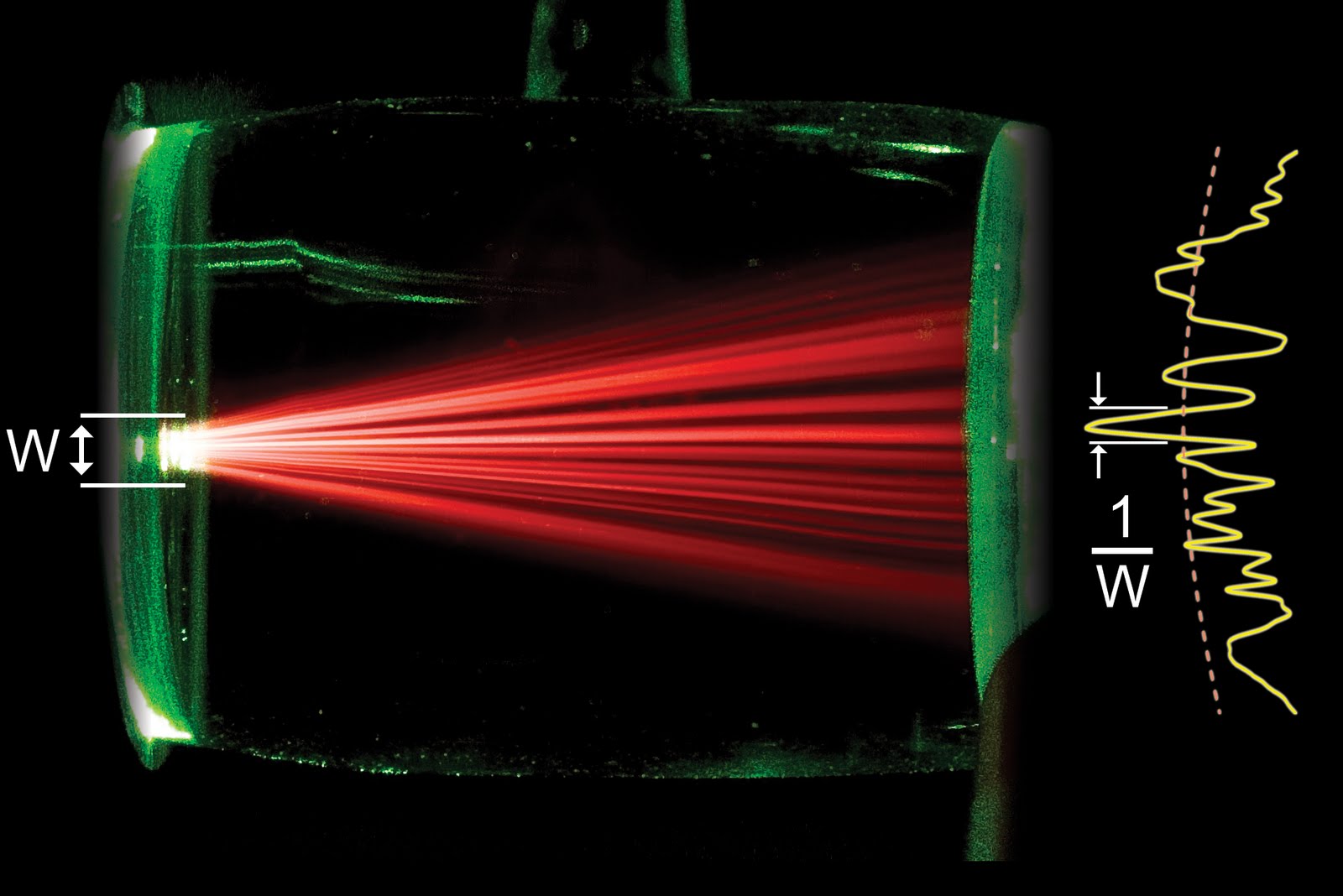
I recently came across the following paper on how HBT interferometry changed as a result of photons interacting with each other before they reached the detectors. What's HBT ? It's a strange phenomena in physics that eventually led to what is currently known as Quantum Optics. Wikipedia offers some definition

The Hanbury Brown and Twiss (HBT) effect is any of a variety of correlation and anti-correlation effects in the intensities received by two detectors from a beam of particles. HBT effects can generally be attributed to the dual wave-particle nature of the beam, and the results of a given experiment depend on whether the beam is composed of fermions or bosons. Devices which use the effect are commonly called intensity interferometers and were originally used in astronomy, although they are also heavily used in the field of quantum optics.

HBT was initially used by Hanbury Brown and Twiss in radio astronomy and then in the visible range to figure out the diameter of certain stars like Betelgeuse.

Since then HBT gave some impetus to quantum otpics and so on. The paper I was intially refering to is  Hanbury Brown and Twiss interferometry with interacting photons which was featured on this very interesting blog ( 2physics.com)


From 2physics.com Experimental observation of a speckle pattern propagating in a nonlinear medium. In the interaction free case, the width of a typical speckle is inversely proportional to the width of the source, W. In the presence of interactions, one needs to take into account the strength of the intensity fluctuations as well. Image credit: Adi Natan


What the paper showed was that if photons had somehow traveled through a nonlinear medium, the HBT interferometry figure would eventually be different at the detector. the authors point to a potential case where this happens: space. Beltegeuse is about 400 light years away from here, so we are talking about large distances and therefore some potential for the photons of Beltegeuse to have interacted with some medium before being detected on earth.

I was wondering the following, by performing HBT interferometry and evaluating the difference between what is to be expected from pure vaccuum and actual results, can we evaluate the medium between us and the 10^11 stars in the universe ? Also proponents of HBT interferometry suggest that it is immune [4] to the seeing effect, but in light of this study is that really the case ? If it is not immune to the seeing effect, then some of results could show signs of the atmosphere of exoplanets ?

Food for thoughts.

[1] Hanbury Brown and Twiss interferometry with interacting photons, Y. Bromberg, Y. Lahini, E. Small  & Y. Silberberg
[2] On the Shape of the Photon: Quantum Coherent Control with Single Photons, Y. Silberberg
[3] Hanbury Brown – Twiss Effect / Intensity Interferometry
[4] Astronomical Applications of Quantum Optics


Liked this entry ? subscribe to Nuit Blanche's feed, there's more where that came from. You can also subscribe to Nuit Blanche by Email, explore the Big Picture in Compressive Sensing or the Matrix Factorization Jungle and join the conversations on compressive sensing, advanced matrix factorization and calibration issues on Linkedin.

Friday, October 14, 2011

Matrix Factorization This Week.

Here is an interesting interaction, how can you give away your robust PCA to an open source project ?

Zeno Ganter reminded me an "older" paper  entitled: Bayesian Probabilistic Matrix Factorization using MCMC by Ruslan Salakhutdinov and Andriy Mnih. The interesting part is the attendant Matlab code,and its implementation by GraphLab. I will list both on the Matrix Factorization Jungle. In the meantime, Zeno also provided me with a list of additional information on matrix factorization:


Hi Igor 
.....
2. Matrix Completion for Implicit Feedback data
The "classical" MF methods for collaborative filtering/recommender systems optimize for RMSE, and can be used if there are explicit ratings by the users. In practice this is very often not the case, you only know about the users' past actions (Who bought what?). Then the completion problem becomes a bit more difficult, because it is a positive-only problem: You only have examples from one class and missing values.
There are several papers dealing with such kind of factorization problems, e.g.
(a) optimizing for pointwise errors:
Hu, Koren, Volinsky: Collaborative Filtering for Implicit Feedback Datasets. ICDM 2008
Pan, Zhou, Cao, Liu, Lukose, Scholz, Yang. 2008: One-Class Collaborative Filtering. ICDM 2008
(b) optimizing for ranking: Rendle, Freudenthaler, Gantner, Schmidt-Thieme: BPR: Bayesian
Personalized Ranking from Implicit Feedback
Speaking of ranking, there is also an approach that does matrix completion, but not optimized for RMSE, but NDCG on the known ratings:
Improving maximum margin matrix factorization Machine Learning Journal and European Conference on Machine Learning (ECML/PKDD 2008)
3. MF implementations in Open Source recommender system frameworks
There are implementations of MF for rating prediction and for implicit feedback data (at least there is a patch for it, not sure whether it is already in an official release). 
Our own package, MyMediaLite, also contains implementations of MF for rating prediciotn and for implicit feedback data. Additionally, we have a BPR-MF implementation. http://ismll.de/mymedialite
4. Parallel SGD for Matrix Completion
We also have an implementation of block-free SGD for RMSE matrix completion,
which uses the same idea as in Jellyfish and in Gemulla et al.'s KDD paper on distributed MF, which was published a bit earlier than Jellyfish:
R. Gemulla, E. Nijkamp, P. J. Haas, Y. Sismanis,  Large-Scale Matrix Factorization with Distributed Stochastic Gradient Descent. Both papers (the KDD paper and the Jellyfish one) come up with the same idea of independent updates, and both papers cover that simple and straighforward idea (nothing be ashamed of!) in a quite complex description. Nonetheless, both papers have plenty of additional ideas and interesting details thrown in, for example (Gemulla) using a bold-driver heuristic (from the neural network literature) for learning rate adaptation, and using subsamples to find good learning rates, or (Jellyfish) using some cores for also doing the example shuffling in parallel, thus avoiding bottlenecks.
......

Thanks Zeno. On arxiv, we had the following preprints:

Matrix factorization from a small number of observed entries has recently garnered much attention as the key ingredient of successful recommendation systems. One unresolved problem in this area is how to adapt current methods to handle changing user preferences over time. Recent proposals to address this issue are heuristic in nature and do not fully exploit the time-dependent structure of the problem. As a principled and general temporal formulation, we propose a dynamical state space model of matrix factorization. Our proposal builds upon probabilistic matrix factorization, a Bayesian model with Gaussian priors. We utilize results in state tracking, such as the Kalman filter, to provide accurate recommendations in the presence of both process and measurement noise. We show how system parameters can be learned via expectation-maximization and provide comparisons to current published techniques.

The power of sparse signal modeling with learned over-complete dictionaries has been demonstrated in a variety of applications and fields, from signal processing to statistical inference and machine learning. However, the statistical properties of these models, such as under-fitting or over-fitting given sets of data, are still not well characterized in the literature. As a result, the success of sparse modeling depends on hand-tuning critical parameters for each data and application. This work aims at addressing this by providing a practical and objective characterization of sparse models by means of the Minimum Description Length (MDL) principle -- a well established information-theoretic approach to model selection in statistical inference. The resulting framework derives a family of efficient sparse coding and dictionary learning algorithms which, by virtue of the MDL principle, are completely parameter free. Furthermore, such framework allows to incorporate additional prior information to existing models, such as Markovian dependencies, or to define completely new problem formulations, including in the matrix analysis area, in a natural way. These virtues will be demonstrated with parameter-free algorithms for the classic image denoising and classification problems, and for low-rank matrix recovery in video applications.
Videos used for this paper can be found here.

This one is interesting for the folks interested in solving SDPs: Regularized Laplacian Estimation and Fast Eigenvector Approximation by Patrick O. Perry, Michael W. Mahoney. The abstract reads:
Recently, Mahoney and Orecchia demonstrated that popular diffusion-based procedures to compute a quick \emph{approximation} to the first nontrivial eigenvector of a data graph Laplacian \emph{exactly} solve certain regularized Semi-Definite Programs (SDPs). In this paper, we extend that result by providing a statistical interpretation of their approximation procedure. Our interpretation will be analogous to the manner in which $\ell_2$-regularized or $\ell_1$-regularized $\ell_2$-regression (often called Ridge regression and Lasso regression, respectively) can be interpreted in terms of a Gaussian prior or a Laplace prior, respectively, on the coefficient vector of the regression problem. Our framework will imply that the solutions to the Mahoney-Orecchia regularized SDP can be interpreted as regularized estimates of the pseudoinverse of the graph Laplacian. Conversely, it will imply that the solution to this regularized estimation problem can be computed very quickly by running, e.g., the fast diffusion-based PageRank procedure for computing an approximation to the first nontrivial eigenvector of the graph Laplacian. Empirical results are also provided to illustrate the manner in which approximate eigenvector computation \emph{implicitly} performs statistical regularization, relative to running the corresponding exact algorithm.

and finally, Fault Tolerant Matrix Pencil Method for Direction of Arrival Estimation by T. Yerriswamy, S.N. Jagadeesha. The abstract reads:
Continuing to estimate the Direction-of-arrival (DOA) of the signals impinging on the antenna array, even when a few elements of the underlying Uniform Linear Antenna Array (ULA) fail to work will be of practical interest in RADAR, SONAR and Wireless Radio Communication Systems. This paper proposes a new technique to estimate the DOAs when a few elements are malfunctioning. The technique combines Singular Value Thresholding (SVT) based Matrix Completion (MC) procedure with the Direct Data Domain (D^3) based Matrix Pencil (MP) Method. When the element failure is observed, first, the MC is performed to recover the missing data from failed elements, and then the MP method is used to estimate the DOAs. We also, propose a very simple technique to detect the location of elements failed, which is required to perform MC procedure. We provide simulation studies to demonstrate the performance and usefulness of the proposed technique. The results indicate a better performance, of the proposed DOA estimation scheme under different antenna failure scenarios.
Credit: NASA/JPL/University of Arizona


Liked this entry ? subscribe to Nuit Blanche's feed, there's more where that came from. You can also subscribe to Nuit Blanche by Email, explore the Big Picture in Compressive Sensing or the Matrix Factorization Jungle and join the conversations on compressive sensing, advanced matrix factorization and calibration issues on Linkedin.

Imaging With Nature, additional thoughts on deblurring

When re-reading Imaging With Nature: Some thoughts on deblurring, the condition in item [1] reminded me of a similar type of condition used to prove recoverability for sparse solutions of underdetermined systems, i.e the KGG condition found by Yin Zhang [2]. Maybe it's just a coincidence. Also, while TILT can be used to calibrate a camera, one wonders how the same technique of using the low rank texture in objects would fare in instances of lucky imaging or turbulence stabilization [4] or in the much more difficult case of a random lens imager calibration. What about dealing with the dust on Cassini's camera ? 


[1] Image deconvolution using a characterization of sharp images in wavelet domain by Hui Ji , Jia Li, Zuowei Shen, Kang Wang.[3] TILT: Transform Invariant Low-rank Textures, by Zhengdong Zhang, Arvind Ganesh, Xiao Liang, and Yi Ma.
[4] Non Rigid Geometric Distortions Correction Application to Atmospheric Turbulence Stabilization by Yu Mao and Jerome Gilles.


Image Credit: NASA/JPL/Space Science Institute,  N00177177.jpg was taken on October 10, 2011 and received on Earth October 10, 2011. The camera was pointing toward PROMETHEUS, and the image was taken using the CL1 and CL2 filters. This image has not been validated or calibrated. A validated/calibrated image will be archived with the NASA Planetary Data System in 2012.


Liked this entry ? subscribe to Nuit Blanche's feed, there's more where that came from. You can also subscribe to Nuit Blanche by Email, explore the Big Picture in Compressive Sensing or the Matrix Factorization Jungle and join the conversations on compressive sensing, advanced matrix factorization and calibration issues on Linkedin.

Thursday, October 13, 2011

Leonardo's Heart

Back in 2000, a mummified dinosaur was found in the hills of Montana. The story of the discovery can be found here.

What I found interesting in this story is the eventual use of a powerful Co-60 X-ray machine at the Johnson Space Center (it looks like they were at Ellington field because of the T-38s shown in the video) to look at the inside of Leonardo, the fossilized mummy. Most important, they actually had a scan at different angles but

....At one point, Kaye and Andersen decided to try something unique and created some stereo imagery from the 2D X-rays. While at Houston, Andersen built a special gantry that allowed the group to change the angle of the X-rays to achieve 3D convergent stereo pairs. “Unfortunately, we didn’t get enough of that done because each X-ray exposure took too long, and we couldn’t produce enough pairs,” says Kaye. However, the few that were available held promise for future applications in which CT scans are not possible....
I wonder if, provided the data is still available, it would not be a good challenge for the various compressive sensing derived CT reconstruction techniques ? I just asked Tom Kaye about this. We'll see.


Liked this entry ? subscribe to Nuit Blanche's feed, there's more where that came from. You can also subscribe to Nuit Blanche by Email, explore the Big Picture in Compressive Sensing or the Matrix Factorization Jungle and join the conversations on compressive sensing, advanced matrix factorization and calibration issues on Linkedin.

Wednesday, October 12, 2011

If there is revolution in rank minimization and nobody hears about it, is this a revolution ?

In Heuristics for Rank Proxy and how it changes everything...., I mentioned how some folks found out that log-det was a better heuristics than the nuclear norm for a proxy to the rank functional when searching for low rank solutions. In Information Theoretical Clustering via Semidefinite Programming, Meihong Wang and Fei Sha are arguing against the log-det heuristic. In the same vein, in Limitations of Matrix Completion via Trace Norm Minimization,  Xiaoxiao Shi and Philip S. Yu argue about the shortfall of the trace norm approach ( All is not well with the Nuclear norm world...). All these attempts that are quantifying the usefulness of some proxy are useful until you realize that there is a flurry of approaches to rank minimization either using other proxies for the rank functional or different approximations to the low rank problematic, here are the few I have noticed so far (comments are welcome):


One of the reason of the success of  the Donoho-Tanner phase transition stems not only because it shows some uniformity of results across different measurement matrices, but also because of its ability to directly compare different solvers/approaches to sparse recovery. As an example, the latest result on sparse recovery became obviously important when it could directly be compared to the then "gold standard" of the Donoho-Tanner phase transition (see also the results of Bob Sturm)

Similar phase transitions have been observed for these low rank matrix recovery problems. Shouldn't there be some sort of standard against which most algorithm implementations ought to compare their results to so that we collectively devise a better mental picture of what is really working ? Because right now to be honest, I can't. Why is this important ? The message passing algorithms that have pretty made a dent against the L_1 recovery used in compressive sensing, are now, unsurprisingly, applied to rank minimization [1]. If there is revolution in rank minimization and nobody hears about it, is this a revolution ?


Credit: NASA, Navigation Camera Sol 2738

Tuesday, October 11, 2011

"What's an algorithm ?"

Meanwhile in the real world people gasp a huge Wow when confronted with some simple deblurring;  [the video below is now private, it showed s person from Adobe/Photoshop featuring a deblur button, a feature potentially inserted in future Adobe products. As the presenter went on showing some examples of the "deblur" button, the crowd kept on gasping with wows, underlining the clarity of the deblured pictures. another person on stage playing the role of the interviewer then asked how this magic could be enabled. The presenter told him it's a new algorithm. The stage person then went on to incredulously ask "what's an algorithm ?". Hence the title of this entry ]


(via PetaPixel)

In a somewhat totally different direction and within the business of science publishing here is a potentially egregious behavior that I will call out on this blog. Why egregious ? Because we most probably have had this type of behavior before. Let us recall that currently one of the best solvers out there in terms of both speed and how far it goes beyond the Donoho-Tanner phase transition (SL0) received a disgraceful rejection letter from the IEEE Signal Processing letters in freaking 2006. I personally asked the authors to kindly put it up on their website (since the claim was so astounding) and they did, first on this blog then on the website. To put this in perspective, a near two full years before the rest of the community gets around to having a fast and similarly efficient solver, the IEEE Signal Processing Letters decided through its own process that this paper was not worthy.  Maybe the process is not worthy of real science. I know ... I know... you are going to say: "What could possibly replace peer-review ?", "How are we going to know what paper is important, we can't even read the papers featured on Nuit Blanche ?". I am not sure but a process that keeps the players honest would sure beat this one.

I also noticed that a large section of retracted papers featured on Retraction Watch could have been caught automatically through the use of a good image comparison algorithm. If the publication were open, I am sure some enterprising folks could take a stab at this one.


Liked this entry ? subscribe to Nuit Blanche's feed, there's more where that came from. You can also subscribe to Nuit Blanche by Email, explore the Big Picture in Compressive Sensing or the Matrix Factorization Jungle and join the conversations on compressive sensing, advanced matrix factorization and calibration issues on Linkedin.
Printfriendly