Friday, June 11, 2010

CS: A question on RIP, Around the blogs in 80 hours and a meeting

A reader sent me the following:
Dear Igor,

I always read your blog and now I have a doubt about RIP. Suppose matrix A satisfy RIP, that is the singular values are bounded above and below by 1-\delta and 1+delta. Now if we set A’=cA, where c is a constant, then the singular values are bounded above and below by c^2(1-\delta) and c^2(1-\delta). Thus A and A’ have different \delta. A’ may be not satisfy RIP. But for signal reconstruction, A and A’ are no different. So how do you explain it? Or for a given matrix B, how can we choose a constant c, make matrix cB have the minimum \delta? Do you have any suggestions?....


My answer:
You are absolutely right. I think it was mentioned in the blog before and this is is why I keep on telling people who are interested in checking recoverability to not rely too much on the RIP in the first place.
Maybe I should compile a list of the different entries on RIP instead of just relying on a word search. Items relevant to the RIP subject include:
I could also include the LinkedIn discussions on the subject ?

Around the blogs, here some entries somehow related to compressive sensing:

Dick Lipton

Djalil Chafai

Bob Sturm

Gonzalo Vazquez-vilar
Laurent Duval

Hong Noh let me know of the following meeting:

INSPIRE 2010

Conference on information representation and estimation
University College London, London, UK.
September 6-8, 2010


Abstract:

Mathematical methods for signal processing and in general for data representation and inference are growing more and more sophisticated. Successful applications of such methods range from medical imaging to security. Developments in mathematics and signal processing are however often divergent. Therefore, the main aim of this conference is to bring together signal processing researchers with statisticians and mathematicians working on problems related to data modelling and estimation, to encourage the exchange of ideas as well as to discuss theoretical underpinning of the methods and domains of application.

The INSPIRE 2010 conference will be held at the Anatomy JZ Young LT at University College London from September 6 till September 8, 2010. So please, book these dates!
The conference includes two plenary talks and a few focused sessions. The plenary speakers are Prof. V. Goyal from Massachusetts Institute of Technology (MIT) and Prof. K Oweiss from Michigan State University. The focused sessions this year are on topics related to sparse inference, overcomplete representations and frames, climate and inference, signal processing in neuroscience, and machine learning.There will also be contributed session and posters. The contributed papers and posters are solicited in any area related to data representation and inference, but contributions covering the specific topics of the focused sessions are particularly welcome. We invite you to submit two-page extended abstracts, with pointers to reference material where appropriate. Submissions should be sent to p.dragottiATimperial.acDOTuk and should be received by June 15th 2010. Notification of acceptance will be given by July 10th 2010. Finally, there is going to be a tutorial session on methods of analysis in compressed sensing. Instructor: Dr Jared Tanner, Edinburgh University

Please notice that registration is free and includes lunches and coffee-breaks for the duration of the conference. Those contributing a paper or a poster will have the accommodation provided for the whole duration of the conference.

Thanks Hong.

Credit: JAXA / JSPEC
Waiting for a signal from Hayabusa. A directional antenna sits in the Woomera desert in southern Australia on June 10, 2010, waiting to hear a signal from the incoming Hayabusa sample return capsule.

Wednesday, June 09, 2010

CS: LinkedIn Discussions, a Public List of Referers, MMDS 2010, PCMI 2010, BioCS


There are 439 members in the Compressive Sensing LinkedIn group. Who is going to be the 500th ? The suspense continues, in the meantime, some of the discussions are very enlightening as other folks are doing a fine job at explaining some of the concepts to newcomers. I also learn out of those.

On top of the more than 1,000 people getting their news from this blog everyday through RSS feeds and E-mail, there are also people coming to the site through websites. I have set up a public referer list on the right hand side of this blog so you can see who is linking to Nuit Blanche. I set it up recently so the listing is still small. It is here. If you want to appear on this list, you know what to do.

The upcoming MMDS 2010 Workshop on Algorithms for Modern Massive Data Sets at Stanford has its program available. Some talks are obviously related to compressive sensing. You have until tomorrow to register.


From Sarah at the Big Numbers blog, I was reminded of this meeting at IAS:

PCMI 2010
June 27 – July 17, 2010
Park City, Utah
RESEARCH TOPIC
Image Processing

EDUCATION TOPIC
Making Mathematical Connections

The Graduate Summer school will feature :

Richard Baraniuk, Rice University
Compressive Sensing: Sparsity-Based Signal Acquisition and Processing
Sensors, imaging systems, and communication networks are under increasing pressure to accommodate ever larger and higher-dimensional data sets; ever faster capture, sampling, and processing rates; ever lower power consumption; communication over ever more difficult channels; and radically new sensing modalities. The foundation of today’s digital data acquisition systems is the Shannon/Nyquist sampling theorem, which asserts that to avoid losing information when digitizing a signal or image, one must sample at least two times faster than the signal’s bandwidth, at the so-called Nyquist rate. Unfortunately, the physical limitations of current sensing systems combined with inherently high Nyquist rates impose a performance brick wall to a large class of important and emerging applications.

This lecture will overview some of the recent progress on compressive sensing, a new approach to data acquisition in which analog signals are digitized not via uniform sampling but via measurements using more general, even random, test functions. In stark contrast with conventional wisdom, the new theory asserts that one can combine “sub-Nyquist-rate sampling” with digital computational power for efficient and accurate signal acquisition. The implications of compressive sensing are promising for many applications and enable the design of new kinds of analog-to-digital converters; radio receivers, communication systems, and networks; cameras and imaging systems, and sensor networks.

Antonin Chambolle, École Polytechnique
Total-Variation based image reconstruction.
In the introduction we will recall the reason for which the Total Variation (TV) was introduced as a powerful tool for image recovery. The focus of the first lectures will be mostly on theoretical aspects. The definition and essential properties of the TV will be detailed, variational problems involving the related perimeter functional will also be considered. Then, we will study the “Rudin-Osher-Fatemi” problem (from a convex analysis point of view, the proximal operator associated to the TV). We will try to analyse some interesting properties of the solutions, including regularity issues.

A second part of the lectures will address algorithmic issues and describe the standard and less standard numerical methods for solving efficiently TV-like problems. In a last lecture, we will discuss original extensions which involve TV-like functionals.

Michael Elad, Israel Institute of Technology
Sparse & Redundant Representations – From Theory to Applications in Image Processing
Modeling natural image content is key in image processing. Armed with a proper model, one can handle various tasks such as denoising, restoration, separation, interpolation and extrapolation, compression, sampling, analysis and synthesis, detection, recognition, and more. Indeed, a careful study of the image processing literature reveals that there is an evolution of such models and their use in applications.

This short-course is all about one such model, which I call Sparse-Land for brevity. This specific model is intriguing and fascinating because of the beauty of its theoretical foundations, the superior performance it leads to in various applications, its universality and flexibility in serving various data sources, and its unified view, which makes all the above processing tasks clear and simple. In this course we shall starts with the mathematical foundations of this model, and then turn to present several image processing applications, where it is shown to lead to state-of-the-art results.

Anna Gilbert, University of Michigan
A survey of sparse approximation
The past 10 years have seen a confluence of research in sparse approximation amongst computer science, mathematics, and electrical engineering. Sparse approximation encompasses a large number of mathematical, algorithmic, and signal processing problems which all attempt to balance the size of a (linear) representation of data and the fidelity of that representation. I will discuss several of the basic algorithmic problems and their solutions, including connections to streaming algorithms and compressive sensing.


The undergraduate Summer school program will feature:

An Introduction to Compressed Sensing

Jared Tanner, University of Edinburgh

Most of the signals, images, and other information forms observed in nature exhibit an underlying simplicity. Audio signals often follow a “musical score” with relatively few dominant tones at any time and images are often formed of large smooth regions separated by edges. This simplified structure allows most signals to be compressed efficiently, where a faithful approximation is stored using many fewer units of information. Two familiar examples of this compression are the .mp3 and .jpg formats for audio and images respectively. Despite the ubiquity of compression, we often take great care to acquire high fidelity/resolution representations before compressing them. This striking inefficiency begs the question: can we acquire a compressed representation directly?

Compressed Sensing is a new (appearing in 2004) topic exploring this question, and explaining when and why we are and are not able to sense a compressed representation directly. This course will begin with an introduction to representations in applied and computational harmonic analysis for compression, including Fourier Series, Wavelets, and other time-frequency representations. We will then embark on a tour of selected topics in compressed sensing, studying various algorithms and under what conditions we can guarantee their desired behavior. These topics will be a blend of signal processing, matrix analysis, inverse problems, optimization, and high-dimensional geometry.


Also of interest:

Research Program in Mathematics

“Image Processing”
Complementing the highly structured Graduate Summer School, which is directed at younger mathematicians, the Research Program in Mathematics addresses the needs of mathematicians who are already carrying out research. The program offers advanced scholars the opportunity to do research, collaborate with their peers, meet outstanding students, and explore new teaching ideas with professional educators. It is designed to introduce active areas of research by focusing on a specific topic. The informal format generates lively exchanges of views and information between established and newer researchers.

2010 Research Program in Image Processing

Organizers: Tony F. Chan, University of California-Los Angeles; Ronald A. DeVore, University of South Carolina-Columbia; Stanley Osher, University of California, Los Angeles; Hongkai Zhao, University of California-Irvine

Some lectures on these topics will be accessible to advanced graduate students and postdocs and while others will be intended for more specialized working groups.

A primary goal of the research program is to foster the collaboration of a diverse group of participants. Daily seminars will be held and all Research Program participants have an opportunity to give a seminar if they choose. (The organizers will draw up a schedule in consultation with the participants.) There will be plenty of time for work and informal discussions. A related goal of this program is to highlight the different methods used to address problems in image processing.

New and recent PhD’s are especially encouraged to apply if they are working in the field of image processing.


One of the webcrawler found the following project (we had a Q&A with Esther Rodriguez-Villegas on a Compressive Sensing EEG a while ago).

BioCS-Node: Enabling Ultra-Low-Power Ambulatory Monitoring of Cardiac and Neurological Bioelectrical Signals Using Compressed Sensing

Project Leader: Pierre Vandergheynst of EPFL/STI/IEL/LTS2

David Atienza of EPFL/STI/IEL/ESL , expert in thermal modeling of multiprocessor architectures and thermal management, hardware/software co-design methods


Our modern society is today threatened by an incipient healthcare delivery crisis caused by the current demographic and lifestyle trends. On the one hand, the world's population is fast aging resulting into an increased prevalence of cardiac and neurological disorders. On the other hand, our busy lifestyles leave little time and motivation for fitness, healthy diet management and mental wellness, and are fueling the rise of the number of people unsuspectingly developing or living with chronic cardiovascular and neurological conditions for decades. As a matter of fact, according to the World Health Organization, cardiovascular diseases (CVD) are the number one cause of death worldwide, responsible for an estimated 17.1 million deaths in 2004 (i.e., 29% of all deaths worldwide) and economic fallout in billions1. Moreover, neurological diseases including stroke, neuromotor ailments and sleep disorders affect up to 1 billion people globally, and are a significant cause of morbidity and mortality (i.e., 12% of all deaths globally)2. These increasingly prevalent cardiac and neurological diseases are requiring escalating levels of supervision and medical management, which are contributing to skyrocketing healthcare costs and, more importantly, are unsustainable for traditional healthcare infrastructures. Wireless body sensor network (WBSN) technologies promise to offer large-scale and cost-effective solutions to this problem. Outfitting patients with wearable, miniaturized and wireless sensors able to measure, pre-process and wirelessly report cardiac and neurological signals to telehealth providers would enable the required personalized, long-term and real-time remote monitoring of chronic patients, its seamless integration with the patient's medical record and its coordination with nursing/medical support.

To successfully deploy WBSNs able to perform long-term, remote and clinically relevant monitoring of chronic patients in free-living conditions, it is critical that sensor devices become vanishingly small and autonomous, while retaining their embedded intelligence and wireless capabilities. Current devices in use today, operate on Li-on battery that provides about 1 Watt-hour of energy, and were evidenced to exhibit, for instance, an autonomy of less than a day for single-lead cardiac bioelectrical signal (i.e., electrocardiogram or ECG) sensing and wireless streaming. This ridiculously low autonomy figure is due to the transmission of uncompressed ECG data over power-hungry wireless links. The autonomy figures would be even more compelling for multi-lead ECG and electroencephalogram (EEG) monitoring. Clearly, significant research contributions remain to be made in terms of ultra-low-power embedded compression of ECG and EEG signals and ultra-low-power wireless WBSN connectivity. Within this project, we propose a novel and promising approach to tackle the former challenge. More specifically, we devise low-complexity, yet, powerful multi-lead cardiac and neurological bioelectrical compression techniques and design their supporting ultra-low-power sensor digital processing platform.

Capitalizing on the largely sparse nature of ECG and EEG, we propose to apply the emerging approach to joint sensing and compression for this class of signals, so-called compressed sensing (CS), which promises significant compression ratios while using computationally light linear encoders. This approach is particularly attractive and promising for our target ultra-low-power WBSN-based monitoring systems because the sensor node can very efficiently jointly compress the acquired ECG/EEG signals through a small number of linear signal-independent measurements while preserving their underlying information; only this small number of measurements will be wirelessly transmitted to the remote telehealth center, where the full multi-lead records can be accurately reconstructed using complex non-linear decoding. More importantly, we propose to design a new sensor embedded platform that effectively implements the compressed sensing of cardiac and neurological bioelectrical signals. If successful, this project could lead to a new way of thinking and designing wireless sensing platforms, and would be a the first to demonstrate the ultra-low-power benefits of compressed sensing for cardiac and neurological bioelectrical signals.

Liked this entry ? subscribe to the Nuit Blanche feed, there's more where that came from

Tuesday, June 08, 2010

CS: Is HIFT an instance of Imaging With Nature ? The data is available.

I know... I know, all of you are dying to see part II of this entry on Compressed Sensing or Inpainting ? Part I but this will have to wait as there is something more inspirational today.

After talking to Raj Rao last week at the Random Matrix conference, I went ahead and asked Brian Dushaw about having access to the data of the Heard Island Feasibility Test. Brian got back to me with the following today:

Hi Igor,
The Heard Island data are on line now - you can find these data here:
http://909ers.apl.washington.edu/~dushaw/heard/data/DVD/

I still need to set up a brief navigational webpage for these directories. The place to start would be the hiftdata.pdf file on HIFT_CD1. Also the special issue of JASA from October 1994 shows all the work that was done with the data.

I can offer no help in dealing with these data - I don't know much about it and will have to thrash around as much as anyone if/when I go to do anything with it. But here it is. There are no strings attached to the data, as far as I know; the data were paid for by the U.S. Government and are in the public domain. But acknowledging the original HIFT people in any publication would be appreciated.

Cheers,


B.D.
Thanks Brian. From "The Heard Island Feasibility Test" by W. H. Munk, R. C. Spindel, A. Baggeroer, and T. G. Birdsall, one can see the type of signals being sent during these tests from the heard Island shown above and detected 20,000 km away.


A more generic presentation can be found in Signals, signal processing, and general results by Theodore G. Birdsall and Kurt Metzger, Matthew A. Dzieciuch. The abstract of that first paper reads:
Acoustic path lengths in the Heard Island Feasibility Test ranged from under 1 Mm to 18 Mm (1 Mm is 1000 km). The signal set consisted of three basic waveforms: cw, pentaline, and M-sequence-modulated carrier. This set offered the opportunity for successful measurements given the large uncertainty in prior estimates of propagation loss, stability, and arrival spread. Receivers ranged from simple sonobuoy systems to elaborate horizontal and vertical arrays. International collaborators acquired data at a variety of sites worldwide. The resulting data has been collected and subjected to a summary form of frequency domain processing. Variations in the recorded spectral phases are largely the result of nonuniformity in the speed of the source ship as determined by GPS comparison. Time domain processing has shown that at all ranges the receptions exhibit exceptional stability.
Of interest is the book on Ocean Acoustic Tomography.

The Heard Island Feasibility Test is at:

Why am I mentioning this test ? While the intent of the test is figuring out if one can detect a signal 10000 's miles, it also is a way of probing different parameters/landscape of the ocean. Isn't this also is a clear instance of Imaging With Nature, namely, the signal being sent (at least some of them) are sparse. The tomographic question answers "Can we infer something about the medium (i.e. the measurement matrix) when one has access to to be x and y". We know that the measurement matrix is highly underdetermined. After the measurement matrix is determined in some fashion, along with additional information such as bottom topography and sattellite determined sea temperature: can we infer something about future signals such as location, mapping and type of:
  • earthquakes,
  • tsunamis,
  • nuclear explosion for CTBT compliance,
  • sun radiation forcing,
  • cloud cover.

On a totally different note here is a fascinating story by Brian about Single Sided Deafness, or Unilateral Hearing Loss, or Monaural Hearing. Of interest is his talk on the matter. Any insight from our acoustic friends ? yes I am talking to you Bob ?

Saturday, June 05, 2010

CS: The long post of the week: YALL1 and more.


Yin Zhang let me know the following:

Dear Igor,

You probably already know that we just released YALL1 v1.0 with source.
The site has been moved to http://yall1.blogs.rice.edu/

Now the code is being managed and maintained mainly by Wotao Yin (Rice) and Junfen Yang (Nanjing University).

From the site, I note the following pages:

Thanks Yin.

Here is an intro to an IEEE special issue entitled: Applications of Sparse Representation and Compressive Sensing By Richard Baraniuk, Emmanuel Candes, Michael Elad, Yi Ma. It starts as:

In the past several years, there have been exciting breakthroughs in the study of high-dimensional sparse signals. A sparse signal is a signal that can be represented as a linear combination of relatively few base elements in a basis or an overcomplete dictionary. Much of the excitement centers around the discovery that under surprisingly broad conditions, a sufficiently sparse linear representation can be correctly and efficiently computed by greedy methods and convex optimization (i.e., the l_1 - l_0 equivalence), even though this problem is extremely difficultVNP-hard in the general case. Further studies have shown that such high-dimensional sparse signals can be accurately recovered from drastically smaller number of (even randomly selected) linear measurements, hence the catch phrase compressive sensing. If these are not surprising enough, more recently, the same analytical and computational tools have seen similarly remarkable successes in advancing the study of recovering high-dimensional low-rank matrices from highly incomplete, corrupted, and noisy measurements.

The Rice Repository has now set up an automatic way for authors to submit their new or corrected papers to the current listing. From the page:
Submitting a Resource

To submit a new or corrected paper for this listing, please complete the form at dsp.rice.edu/cs/submit. To submit a resource that isn't a paper, please email e dot dyer at rice dot edu.


NP-hard problems such as l_o cannot be solved by quantum computers. D-Wave seems to think otherwise.


Stephen Wright just put out two new presentations on his page:
Here is the long list of papers my webcrawler found on the web related in some or another to compressive sensing. Enjoy!

This is SPIRAL-TAP: Sparse Poisson Intensity Reconstruction ALgorithms Theory and Practice by Zachary Harmany, Roummel Marcia, and Rebecca Willett. The abstract reads:
The observations in many applications consist of counts of discrete events, such as photons hitting a detector, which cannot be effectively modeled using an additive bounded or Gaussian noise model, and instead require a Poisson noise model. As a result, accurate reconstruction of a spatially or temporally distributed phenomenon (f*) from Poisson data (y) cannot be effectively accomplished by minimizing a conventional penalized least-squares objective function. The problem addressed in this paper is the estimation of f* from y in an inverse problem setting, where (a) the number of unknowns may potentially be larger than the number of observations and (b) f* admits a sparse approximation. The optimization formulation considered in this paper uses a penalized negative Poisson log-likelihood objective function with nonnegativity constraints (since Poisson intensities are naturally nonnegative). In particular, the proposed approach incorporates key ideas of using separable quadratic approximations to the objective function at each iteration and penalization terms related to l1 norms of coefficient vectors, total variation seminorms, and partition-based multiscale estimation methods.
On Roummel F. Marcia's webpage one can read;
Opportunities: Positions for graduate and undergraduate students are available in the areas of optimization, linear algebra, and compressed sensing. These positions are in conjunction with the National Science Foundation grant, DMS-0811062: Second-order methods for large-scale optimization in compressed sensing.
http://www.nsf.gov/awardsearch/showAward.do?AwardNumber=0811062

The spectrum sensing performance of Cognitive Radios (CRs) considering noisy signal measurements and the time domain transmission statistics of the Primary User (PU) is considered in this paper. When the spectrum is linearly swept in the frequency domain continuously to detect the presence of the PU the time-domain statistics of the PU plays an important role in the detection performance. This is true especially when the PU’s bandwidth is much smaller than the CR’s scanning frequency range.We model the transmission statistics that is the temporal characteristics of the PU as a Poisson arrival process with a random occupancy time. The spectrum sensing performance at the CR node is then theoretically analyzed based on noisy envelope detection together with the time domain spectral occupancy statistics. The miss detection and false alarm probabilities are derived from the considered spectral occupancy model and the noise model, and we present simulation results to verify our theoretical analysis. We also study the minimum required sensing time for the wideband CR to reliably detect the narrowband PU with a given confidence level considering its temporal characteristics.

We consider unbiased estimation of a sparse nonrandom vector corrupted by additive white Gaussian noise. We show that while there are infinitely many unbiased estimators for this problem, none of them has uniformly minimum variance. Therefore, we focus on locally minimum variance unbiased (LMVU) estimators. We derive simple closed-form lower and upper bounds on the variance of LMVU estimators or, equivalently, on the Barankin bound (BB). Our bounds allow an estimation of the threshold region separating the low-SNR and high-SNR regimes, and they indicate the asymptotic behavior of the BB at high SNR. We also develop numerical lower and upper bounds which are tighter than the closed-form bounds and thus characterize the BB more accurately. Numerical studies compare our characterization of the BB with established biased estimation schemes, and demonstrate that while unbiased estimators perform poorly at low SNR, they may perform better than biased estimators at high SNR. An interesting conclusion of our analysis is that the high-SNR behavior of the BB depends solely on the value of the smallest nonzero component of the sparse vector, and that this type of dependence is also exhibited by the performance of certain practical estimators.

Shrinkage Without Thresholding: L1 Norm Minimization using the Landweber Iteration by Andy Yagle. The abstract reads:
We use the Landweber iteration to compute sparse solutions to the underdetermined linear system of equations y=Ax using iterative reweighted least squares (IRLS). We show that shrinkage, not thresholding, is the key to minimizing the LASSO functional. We also show how the Landweber iteration without thresholding can be used instead of linear programming for basis pursuit, and how to accelerate convergence of the Landweber iteration in this case.
The goal is to reconstruct a sparse signal from some, but not all, of its Discrete Fourier Transform (DFT) values. If the signal has K non-zero and real values, a unique solution is determined by any K DFT values, their conjugates, and the DC value, if the DFT order is prime. However, no algorithm is known for this unless the K DFT values are at consecutive frequencies (a total of 2K+1 consecutive values). l1- norm minimization only works if the frequencies are randomly chosen. We present a new algorithm that reconstructs a K-sparse non-negative real-valued signal from any K DFT values, their conjugates, and the DC value, provided that the DFT order is prime and less than 4K. It does not use the l1 norm or pursuit.

Polytope Faces Pursuit is a greedy algorithm that performs Basis Pursuit with similar order complexity to Orthogonal Matching Pursuit. The algorithm adds one basis vector at a time and adopts a path-following approach based on the geometry of the polar polytope associated with the dual Linear Program. Its initial implementation uses the method of Cholesky factorization to update the solution vector at each step, which can be computationally expensive for solving large scale problems as it requires the succesive storage of large matrices. In this paper, we present a different approach using directional updates to estimate the solution vector at each time. The proposed method uses the gradient descent method, reducing the memory requirements and computational complexity. We demonstrate the application of this Gradient Polytope Faces Pursuit algorithm to a source separation problem.

We propose an ℓ1 criterion for dictionary learning for sparse signal representation. Instead of directly searching for the dictionary vectors, our dictionary learning approach identifies vectors that are orthogonal to the subspaces in which the training data concentrate. We study conditions on the coefficients of training data that guarantee that ideal normal vectors deduced from the dictionary are local optima of the criterion. We illustrate the behavior of the criterion on a 2D example, showing that the local minima correspond to ideal normal vectors when the number of training data is sufficient. We conclude by describing an algorithm that can be used to optimize the criterion in higher dimension.

Compressed Sensing with Nonlinear Observations by Thomas Blumensath. The abstract reads:
Compressed sensing is a recently developed signal acquisition technique. In contrast to traditional sampling methods, signi cantly fewer samples are required whenever the signals admit a sparse representation. Crucially, sampling methods can be constructed that allow the reconstruction of sparse signals from a small number of measurements using efficient algorithms. We have recently generalised these ideas in two important ways. We have developed methods and theoretical results that allow much more general constraints to be imposed on the signal and we have also extended the approach to more general Hilbert spaces. In this paper we introduce a further generalisation to compressed sensing and allow for non-linear sampling methods. This is achieved by using a recently introduced generalisation of the Restricted Isometry Property (or the bi-Lipschitz condition) traditionally imposed on the compressed sensing system. We show that, if this more general condition holds for the nonlinear sampling system, then we can reconstruct signals from non-linear
compressive measurements.

Fast Sparse Representation with Prototypes by Jia-Bin Huang and Ming-Hsuan Yang. The abstract reads:
Sparse representation has found applications in numerous domains and recent developments have been focused on the convex relaxation of the `0-norm minimization for sparse coding (i.e., the l_1-norm minimization). Nevertheless, the time and space complexities of these algorithms remain significantly high for large-scale problems. As signals in most problems can be modeled by a small set of prototypes, we propose an algorithm that exploits this property and show that the `1-norm minimization problem can be reduced to a much smaller problem, thereby gaining significant speed-ups with much less memory requirements. Experimental results demonstrate that our algorithm is able to achieve double-digit gain in speed with much less memory requirement than the state-of-the-art algorithms.


Encouraged by the promising application of compressed sensing in signal compression, we investigate its formulation and application in the context of speech coding based on sparse linear prediction. In particular, a compressed sensing method can be devised to compute a sparse approximation of speech in the residual domain when sparse linear prediction is involved. We compare the method of computing a sparse prediction residual with the optimal technique based on an exhaustive search of the possible nonzero locations and the well known Multi-Pulse Excitation, the first encoding technique to introduce the sparsity concept in speech coding. Experimental results demonstrate the potential of compressed sensing in speech coding techniques, offering high perceptual quality with a very sparse approximated prediction residual.

Here is a poster entitled: Acceleration of IDEAL Water-Fat Imaging using Compressed Sensing by S. D. Sharma, H. H. Hu, and Krishna Nayak. The introduction reads:
IDEAL is an iterative technique for separating water and fat signals on a per-voxel basis [1]. Water-fat imaging plays an important role in many clinical applications, including high-spatial resolution 3D knee imaging to characterize bone marrow and cartilage [2], and 3D whole abdomen imaging to quantify fat in adipose tissue depots and organs [3]. However, the long scan times required increase susceptibility to motion artifacts. Thus, water-fat imaging applications can significantly benefit from data acceleration. In this work, we reformulate the IDEAL algorithm to estimate water and fat signals on a whole-image basis [4], and present an approach to integrate Compressed Sensing (CS) [5] into the accelerated water-fat separation framework [6]. We demonstrate up to 3x acceleration using CS-IDEAL

The following papers come from the same lab (webpage here);

This paper investigates the potential of the compressed sensing (CS) paradigm for video streaming in Wireless Multimedia Sensor Networks. The objective is to co-design a low complexity video encoder based on compressed sensing and a rate-adaptive streaming protocol for wireless video transmission. The proposed rate control scheme is designed with the objectives to maximize the received video quality at the receiver and to prevent network congestion while maintaining fairness between multiple video transmissions. Video distortion is represented through analytical and empirical models and minimized based on a new cross-layer control algorithm that jointly regulates the video encoding rate and the channel coding rate at the physical layer based on the estimated channel quality. The end-to-end data rate is regulated to avoid congestion while maintaining fairness in the domain of video quality rather than data rate. The proposed scheme is shown to outperform TCP-Friendly Rate Control (TFRC).

On the Performance of Compressive Video Streaming for Wireless Multimedia Sensor Networks by Scott Pudlewski and Tommaso Melodia. The abstract reads:
This paper investigates the potential of the compressed sensing (CS) paradigm for video streaming in Wireless Multimedia Sensor Networks. The objective is to study performance limits and outline key design principles that will be the basis for cross-layer protocol stacks for efficient transport of compressive video streams. Hence, this paper investigates the effect of key video parameters (i.e., quantization, CS samples per frame, and channel encoding rate) on the received video quality of CS images transmitted through a wireless channels. It is shown that, unlike JPEG-encoded images, CS-encoded images exhibit an inherent resiliency to channel errors, caused by the unstructured image representation; this leads to basically zero loss in image quality for random channel bit error rates as high as 10−4, and low degradation up to 10−3. Furthermore, it is shown how, unlike traditional wireless imaging systems, forward error correction is not beneficial for wireless transmission of CS images. Instead, an adaptive parity scheme that drops samples in error is proposed and shown to improve image quality. Finally, a low-complexity, adaptive video encoder, is proposed that performs low-complexity motion estimation on sensors, thus greatly reducing the amount of data to be transmitted.

Data loss in wireless communications greatly affects the reconstruction quality of a signal. In the case of images, data loss results in a reduction in quality of the received image. Conventionally, channel coding is performed at the encoder to enhance recovery of the signal by adding known redundancy. While channel coding is effective, it can be very computationally expensive. For this reason, a new mechanism of handling data losses in Wireless Multimedia Sensor Networks (WMSN) using Compressed Sensing (CS) is introduced in this paper. This system uses compressed sensing to detect and compensate for data loss within a wireless network. A combination of oversampling and an adaptive parity scheme are used to determine which CS samples contain bit errors, remove these samples and transmit additional samples to maintain a target image quality A study was done to test the combined use of adaptive parity and compressive oversampling to transmit and correctly recover image data in a lossy channel to maintain Quality of Information (QoI) of the resulting images. It is shown that by using the two components, an image can be correctly recovered even in a channel with very high loss rates of 10%. The AP portion of the system was also tested on a software defined radio testbed. It is shown that by transmitting images using a CS compression scheme with AP error detection, images can be successfully transmitted and received even in channels with very high bit error rates.
Credit: ESA/NASA, SOHO

And you thought it was not possible...

If you were patient enough yesterday, you could get a direct feed to your computer of the Falcon 9 take-off and entry into space. wow.


At about the time of the launch, Ramesh and I were discussing and agreed that there needs to be more space for inspiring papers in conferences. Ramesh recounted how one of his paper fitting that description received emotional reviews.

Congrats SpaceX, congrats Andrew.

Friday, June 04, 2010

CS: Around the blogs in 80 hours.


Andrew Hensley who now works at SpaceX just let me know to watch out for today's first launch of the SpaceX Falcon 9 rocket. The webcast is here:

The launch is NET (No Earlier Than) 11:00 EST and the launch window will last for four hours. Go Falcon 9!

Also of cosmic interest is the asteroid hit on Jupiter 2 days ago:


In the meantime, here some other exciting blog entries, a melting of sorts:

Alex Gittens:
Terry Tao:
Andrew McGregor:
Meena Mani:
Bob Sturm:
Djalil Chafai:
David Brady:
Image Sensor Worl blog:
  • Aptina History on Youtube
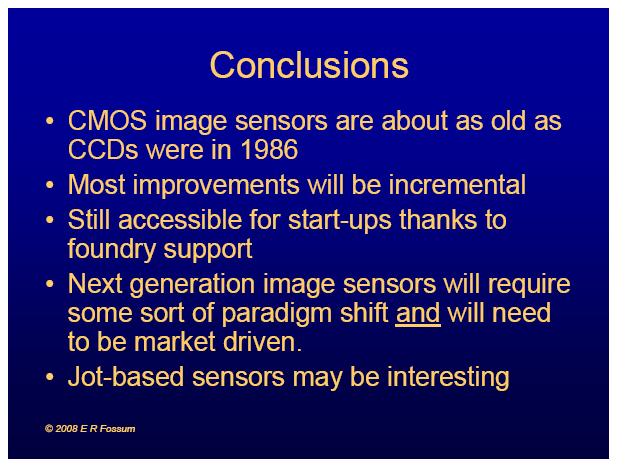
  • Aptina Announces 1.9um Pixel HD Video Sensor from that entry some words from Eric Fossum, the inventor of CMOS imagers:
    ....At the time, in the early 1990's, CCDs were the indisputable king of imaging technology. The power dissipation of CCDs and associated electronics were enormous, and for space missions, CCD cameras were very bulky, power hungry, and prone to all kinds of failures. But their performance was/is extraordinary.

    Our goal was to come up with a miniaturized scientific-quality image sensor technology that would maintain the performance but allow miniaturization. At that time, almost everyone (and I refer to the establishment of CCD guys) thought putting an ADC on chip was a BAD idea, much less integrating timing and control circuits, drivers, or digital processing. So, a CMOS based camera-on-a-chip (meaning camera electronics) was a radical idea. I did not know at that time of the notable work going on in Edinburgh or Sweden - but those efforts were definitely not geared towards image quality - they were geared towards low cost and minimal imaging quality (and in Linkoping, speed). They all used what I subsequently termed passive pixels to distinquish them from APS. (This was also what VVL and Omnivision used when they went into business. The Edinburgh and Linkoping teams definitely were part of making this whole camera-on-a-chip technology become ubiquitous today....
  • Panasonic Announces D-IMager, a 3D ToF Imager
As an aside you really want to take a look at Eric Fossum's presentations including this one


Finally, we have a new on-going discussion on the Compressive Sensing group on LinkedIn (we are now at 428 members:


Credit: Photo: SpaceX. Video: Anthony Wesley

Thursday, June 03, 2010

CS: LInkedIn Discussions, Nuclear Norm, Multiplicative Noise, Noiselets and more.

Yesterday, I mentioned the paper entitled L1 Minimization via Randomized First Order Algorithms by Anatoli Juditsky, Fatma Kilinc Karzan, Arkadi Nemirovski. Arkadi tells me that they are thinking about "what should be done to make the code publicly available". Great! we are all looking forward to solvers that can handle very large problems.

As the number of folks joining the LinkedIn Compressive Sensing Group grows to 412 members, we are beginning to see some activity on the Discussion section with four new discussions:
I look forward to more exchange there.


An anonymous commenter mentioned in the previous entry the following:

singular value thresholding:
here is an even simpler algorithm that does not need any SVDs, in case you are interested: www.m8j.net/data/List/Files-149/fastRegNuclearNormOptimization.pdf
Thanks Anonymous. I look forward to a toy implementation of that algorithm from the authors! The paper is : A Simple Algorithm for Nuclear Norm Regularized Problems by Martin Jaggi, Marek Sulovsk y. The abstract reads:
Optimization problems with a nuclear norm regularization, such as e.g. low norm matrix factorizations, have seen many applications recently. We propose a new approximation algorithm building upon the recent sparse approximate SDP solver of (Hazan, 2008). The experimental e ciency of our method is demonstrated on large matrix completion problems such as the Netflix dataset. The algorithm comes with strong convergence guarantees, and can be interpreted as a rst theoretically justi ed variant of Simon-Funk-type SVD heuristics. The method is free of tuning parameters, and very easy to parallelize.


The attendant slides are here.


Here are additional papers and preprints that got my attention since yesterday:

Compressive Sensing (CS) is a new paradigm in signal acquisition and compression that has been attracting the interest of the signal compression community. When it comes to image compression applications, it is relevant to estimate the number of bits required to reach a specific image quality. Although several theoretical results regarding the rate-distortion performance of CS have been published recently, there are not many practical image compression results available. The main goal of this paper is to carry out an empirical analysis of the rate-distortion performance of CS in image compression. We analyze issues such as the minimization algorithm used and the transform employed, as well as the trade-off between number of measurements and quantization error. From the experimental results obtained we highlight the potential and limitations of CS when compared to traditional image compression
methods.
Echoing yesterday's paper on a similar subject on multiplicative noise in the measurement matrix here is: Anti-Measurement Matrix Uncertainty for Robust Sparse Signal Recovery with The Mixed l2 and l1 Norm Constraint by Yipeng Liu, Qun Wan. The abstract reads:
Compressive sensing (CS) is a technique for estimating a sparse signal from the random measurements and the measurement matrix. Traditional sparse signal recovery methods have seriously degeneration with the measurement matrix uncertainty (MMU). Here the MMU is modeled as a bounded additive error. An anti-uncertainty constraint in the form of a mixed l2 and l1 norm is deduced from the sparse signal model with MMU. Then we combine the sparse constraint with the anti-uncertainty constraint to get an anti-uncertainty sparse signal recovery operator. Numerical simulations demonstrate that the proposed operator has a better reconstructing performance with the MMU than traditional methods.
The feasibility of sparse signal reconstruction depends heavily on the inter-atom interference of redundant dictionary. In this paper, a semi-blindly weighted minimum variance distortionless response (SBWMVDR) is proposed to mitigate the inter-atom interference. Examples of direction of arrival estimation are presented to show that the orthogonal match pursuit (OMP) based on SBWMVDR performs better than the ordinary OMP algorithm.

On the incoherence of noiselet and Haar bases by Tomas Tuma, Paul Hurley. The abstract reads:
Noiselets are a family of functions completely uncompressible using Haar wavelet analysis. The resultant perfect incoherence to the Haar transform, coupled with the existence of a fast transform has resulted in their interest and use as a sampling basis in compressive sampling. We derive a recursive construction of noiselet matrices and give a short matrix-based proof of the incoherence.


Model selection: Two fundamental measures of coherence and their algorithmic significance by
Waheed U. Bajwa, Robert Calderbank, and Sina Jafarpour. The abstract reads:
High-rate data communication over a multipath wireless channel often requires that the channel response be known at the receiver. Training-based methods, which probe the channel in time, frequency, and space with known signals and reconstruct the channel response from the output signals, are most commonly used to accomplish this task. Traditional training-based channel estimation methods, typically comprising of linear reconstruction techniques, are known to be optimal for rich multipath channels. However, physical arguments and growing experimental evidence suggest that many wireless channels encountered in practice tend to exhibit a sparse multipath structure that gets pronounced as the signal space dimension gets large (e.g., due to large bandwidth or large number of antennas). In this paper, we formalize the notion of multipath sparsity and present a new approach to estimating sparse (or effectively sparse) multipath channels that is based on some of the recent
advances in the theory of compressed sensing. In particular, it is shown in the paper that the proposed approach, which is termed as compressed channel sensing, can potentially achieve a target reconstruction error using far less energy and, in many instances, latency and bandwidth than that dictated by the traditional leastsquares-
based training methods.

The problem of model selection arises in a number of contexts, such as compressed sensing, subset selection in linear regression, estimation of structures in graphical models, and signal denoising. This paper generalizes the notion of \emph{incoherence} in the existing literature on model selection and introduces two fundamental measures of coherence---termed as the worst-case coherence and the average coherence---among the columns of a design matrix. In particular, it utilizes these two measures of coherence to provide an in-depth analysis of a simple one-step thresholding (OST) algorithm for model selection. One of the key insights offered by the ensuing analysis is that OST is feasible for model selection as long as the design matrix obeys an easily verifiable property. In addition, the paper also characterizes the model-selection performance of OST in terms of the worst-case coherence, \mu, and establishes that OST performs near-optimally in the low signal-to-noise ratio regime for N x C design matrices with \mu = O(N^{-1/2}). Finally, in contrast to some of the existing literature on model selection, the analysis in the paper is nonasymptotic in nature, it does not require knowledge of the true model order, it is applicable to generic (random or deterministic) design matrices, and it neither requires submatrices of the design matrix to have full rank, nor does it assume a statistical prior on the values of the nonzero entries of the data vector.


Credit video: RSA drawing of Dan Pink talk at TED.

Tuesday, June 01, 2010

CS: The long entry of the week.


Here is a selection of papers that caught my interest this past week:

L1 Minimization via Randomized First Order Algorithms by Anatoli Juditsky, Fatma Kilinc Karzan, Arkadi Nemirovski. The abstract reads:
In the paper, we propose a randomized algorithm for solving bilinear saddle points problems, present its theoretical efficiency estimates and discuss a number of applications, primarily to the problem of $\ell_1$ minimization arising in sparsity-oriented Signal Processing. We demonstrate, both theoretically and by numerical examples, that the when seeking for medium-accuracy solutions of large-scale $\ell_1$ minimization problems, our randomized algorithm outperforms significantly (and progressively as the sizes of the problem grow) the state-of-the art deterministic methods.

On Low Rank Matrix Approximations with Applications to Synthesis Problem in Compressed
Sensing
by Anatoli Juditsky, Fatma Kilinc Karzan, Arkadi Nemirovski. The abstract reads:
We consider the synthesis problem of Compressed Sensing {given s and an M£n matrix A, extract from it an m £ n submatrix Am, certified to be s-good, with m as small as possible. Starting from the veri¯able su±cient conditions of s-goodness, we express the synthesis problem as the problem of approximating a given matrix by a matrix of speci¯ed low rank in the uniform norm. We propose randomized algorithms for efficient construction of rank k approximation of matrices of size m £ n achieving accuracy bounds O(1) q ln(mn) k which hold in expectation or with high probability. We also supply derandomized versions of the approximation algorithms which does not require random sampling of matrices and attains the same accuracy bounds. We further demonstrate that our algorithms are optimal up to the logarithmic in m; n factor, i.e. the accuracy of such an approximation for the identity matrix In cannot be better than O(k ¡1 2 ). We provide preliminary numerical results on the performance of our algorithms for the synthesis problem.


In the next paper, Michael Elad introduces his work as follows:
In a new paper with Raja Giryes, we study the performance of three algorithms: the Subspace Pursuit, the CoSaMP, and the Iterative Hard Threshodling. Our analysis aims to show that under the assumtion of random additive noise, these estimation algorithms are leading to near-oracle performance, with an error that is a constant and a log-factor away from the oracle's deviation. Our work also establishes uniform bounds, implying that the obtained error-bounds are true depending ONLY on the properties of the dictionary and the cardinality of the representation vector. This puts the three algorithms in the same line with Basis Pursuit and Dantzig-Selector, and differentiating them from greedy algorithms (e.g. OMP, thresholding). Our analysis is RIP-based, and as such, it is mostly relevant to random matrices as practiced in compressed-sensing.
The paper: RIP-Based Near-Oracle Performance Guarantees for Subspace-Pursuit, CoSaMP, and Iterative Hard-Thresholding by Raja Giryes and Michael Elad. The abstract reads:
This paper presents an average case denoising performance analysis for the Subspace Pursuit (SP), the CoSaMP and the IHT algorithms. This analysis considers the recovery of a noisy signal, with the assumptions that (i) it is corrupted by an additive random white Gaussian noise; and (ii) it has a K-sparse representation with respect to a known dictionary D. The proposed analysis is based on the Restricted-Isometry-Property (RIP), establishing a near-oracle performance guarantee for each of these algorithms. The results for the three algorithms differ in the bounds’ constants and in the cardinality requirement (the upper bound on K for which the claim is true). Similar RIP-based analysis was carried out previously for the Dantzig Selector (DS) and the Basis Pursuit (BP). Past work also considered a mutual-coherence-based analysis of the denoising performance of the DS, BP, the Orthogonal Matching Pursuit (OMP) and the thresholding algorithms. This work differs from the above as it addresses a different set of algorithms. Also, despite the fact that SP, CoSaMP, and IHT are greedy-like methods, the performance guarantees developed in this work resemble those obtained for the relaxation-based methods (DS and BP), suggesting that the performance is independent of the sparse representation entries contrast and magnitude.

Penalized least squares regression is often used for signal denoising and inverse problems, and is commonly interpreted in a Bayesian framework as a Maximum A Posteriori (MAP) estimator, the penalty function being the negative logarithm of the prior. For example, the widely used quadratic program (with an $\ell^1$ penalty) associated to the LASSO / Basis Pursuit Denoising is very often considered as the MAP under a Laplacian prior. The objective of this paper is to highlight the fact that, while this is {\em one} possible Bayesian interpretation, there can be other equally acceptable Bayesian interpretations. Therefore, solving a penalized least squares regression problem with penalty $\phi(x)$ should not necessarily be interpreted as assuming a prior $C\cdot \exp(-\phi(x))$ and using the MAP estimator. In particular, we show that for {\em any} prior $p_X(x)$, the conditional mean can be interpreted as a MAP with some prior $C \cdot \exp(-\phi(x))$. Vice-versa, for {\em certain} penalties $\phi(x)$, the solution of the penalized least squares problem is indeed the {\em conditional mean}, with a certain prior $p_X(x)$. In general we have $p_X(x) \neq C \cdot \exp(-\phi(x))$.
In the next two abstracts, there were many formula, please check the papers for a coherent reading:

Deterministic Sparse Fourier Approximation via Fooling Arithmetic Progressions by Adi Akavia. The abstract reads:
A significant Fourier transform (SFT) algorithm, given a threshold and oracle access to a function f, outputs (the frequencies and approximate values of) all the -significant Fourier coefficients of f, i.e., the Fourier coefficients whose magnitude exceeds kfk22 . In this paper we present the first deterministic SFT algorithm for functions f over ZN which is: (1) Local, i.e., its running time is polynomial in logN, 1= and L1( b f) (the L1 norm of f’s Fourier transform). (2) Robust to random noise. This strictly extends the class of compressible/Fourier sparse functions over ZN efficiently handled by prior deterministic algorithms. As a corollary we obtain deterministic and robust algorithms for sparse Fourier approximation, compressed sensing and sketching. As a central tool, we prove that there are: 1. Explicit sets A of size poly((lnN)d; 1=") with "-discrepancy in all rank d Bohr sets in ZN. This extends the Razborov-Szemeredi-Wigderson result on "-discrepancy in arithmetic progressions to Bohr sets, which are their higher rank analogue. 2. Explicit sets AP of size poly(lnN; 1=") that "-approximate the uniform distribution over a given arithmetic progression P in ZN, in the sense that jEx2A (x) �� Ex2P (x)j " for all linear tests in ZN. This extends results on small biased sets, which are sets approximating the uniform distribution over the entire domain, to sets approximating uniform distributions over (arbitrary size) arithmetic progressions. These results may be of independent interest.
Fast Singular Value Thresholding without Singular Value Decomposition by Jian-Feng Cai and Stanley Osher. The abstract reads:
We are interested in solving the following minimization problem where is a given matrix, and is the Frobenius norm and the nuclear norm. This problem serves as a basic subroutine in many popular numerical schemes for nuclear norm minimization problems, which arise from low rank matrix recovery such as matrix completion. As has an explicit expression which shrinks the singular values of and keeps the singular vectors, is referred to singular value thresholding (SVT) operator in the literature. Conventional approaches for first find the singular value decomposition (SVD) of and then shrink the singular values. However, such approaches are time consuming under some circumstances, especially when the rank of is not low compared to the matrix dimension or is completely unpredictable. In this paper, we propose a fast algorithm for directly computing without using SVDs. Numerical experiments show that the proposed algorithm is much more efficient than the approach using the full SVD.

The following has similarities with the multiplicative noise papers found in CS: Sparse Recovery under Matrix Uncertainty by Mathieu Rosenbaum and Alexandre B. Tsybakov. The abstract reads:

We consider the model
y = Xµ¤ + »;
Z = X + ¥;
where the random vector y 2 Rn and the random n £ p matrix Z are observed, the n £ p matrix X is unknown, ¥ is an n £ p random noise matrix, » 2 Rn is a noise independent of ¥, and µ¤ is a vector of unknown parameters to be estimated. The matrix uncertainty is in the fact that X is observed with additive error. For dimensions p that can be much larger than the sample size n we consider the estimation of sparse vectors µ¤. Under the matrix uncertainty, the Lasso and Dantzig selector turn out to be extremely unstable in recovering the sparsity pattern (i.e., of the set of non-zero components of µ¤), even if the noise level is very small. We suggest new estimators called the matrix uncertainty selectors (or shortly the MU-selectors) which are close to µ¤ in di®erent norms and in the prediction risk if the Restricted Eigenvalue assumption on X is satis¯ed. We also show that under somewhat stronger assumptions these estimators recover correctly the sparsity pattern.

Estimation of High-Dimensional Low Rank Matrices By Angelika Rohde and Alexandre B. Tsybakov. The abstract reads:
Suppose that we observe entries or, more generally, linear combinations of entries of an unknown m×T-matrix A corrupted by noise. We are particularly interested in the high-dimensional setting where the number mT of unknown entries can be much larger than the sample size N. Motivated by several applications, we consider estimation of matrix A under the assumption that it has small rank. This can be viewed as dimension reduction or sparsity assumption. In order to shrink towards a low-rank representation, we investigate penalized least squares estimators with a Schatten-p quasi-norm penalty term, p · 1. We study these estimators under two possible assumptions – a modified version of the restricted isometry condition and a uniform bound on the ratio “empirical norm induced by the sampling operator/ Frobenius norm”. The main results are stated as non-asymptotic upper bounds on the prediction risk and on the Schatten-q risk of the estimators, where q 2 [p, 2]. The rates that we obtain for the prediction risk are of the form rm/N (for m = T), up to logarithmic factors, where r is the rank of A. The particular examples of multitask learning and matrix completion are worked out in detail. The proofs are based on tools from the theory of empirical processes. As a by-product we derive bounds for the kth entropy numbers of the quasi-convex Schatten class embeddings SMp ,! SM 2 , p \lt 1, which are of independent interest.

Guiseppe Paleologo on Twitter pointed out to: Spectral Density of Sparse Sample Covariance Matrices by Taro Nagao, Toshiyuki Tanaka. The abstract reads:
Applying the replica method of statistical mechanics, we evaluate the eigenvalue density of the large random matrix (sample covariance matrix) of the form $J = A^{\rm T} A$, where $A$ is an $M \times N$ real sparse random matrix. The difference from a dense random matrix is the most significant in the tail region of the spectrum. We compare the results of several approximation schemes, focusing on the behavior in the tail region.
from there:
One of the simplest ways to modify the random matrix J so that Marcenko-Pastur law breaks down is to make the matrix A sparse. An example demonstrating the significance of considering random matrix ensembles defined on the basis of sparse A can be found in communication theory: Information theoretic channel capacity of a randomly-spread Code-Division Multiple- Access (CDMA) channel is evaluated in terms of eigenvalue distribution of the matrix J = ATA with A defining the random spreading. It has been argued [11] that some wideband CDMA schemes can be modeled as a sparsely-spread system, where deviations from Mar˘cenko-Pastur law may affect performance of such systems. Sparse random matrices in general are also of interest in many branches of applications. In particular, the eigenvector localization expected to occur in sparse random matrices is one of the most outstanding phenomena in disordered systems. The appearance of isolated eigenvalue spectra in the tail region is another interesting feature. Such features are also observed in heavy-tailed random matrices and were recently studied in detail [12, 13, 14].
While I was watching some presentations at the conference on Random Matrices, I came across this paper:

In this contribution, we provide a theoretical study of two hypothesis tests allowing to detect the presence of an unknown transmitter using several sensors. Both tests are based on the analysis of the eigenvalues of the sampled covariance matrix of the received signal. The Generalized Likelihood Ratio Test (GLRT) derived in [1] is analyzed under the assumption that both the number K of sensors and the length N of the observation window tend to infinity at the same rate: K/N - c element of (0, 1). The GLRT is compared with a test based on the condition number used which is used in cognitive radio applications. Using results of random matrix theory
for spiked models and tools of Large Deviations, we provide the error exponent curve associated with both test and prove that the GLRT outperforms the test based on the condition number.
Eventually, Raj Rao and I talked a little bit about the fascinating Heard Island Feasibility Test. Brian Dushaw, the main scientist involved in the project let me know that he'll look into whether the 3GB of data can be made available on the site. I wonder if one could do some sorts of blind deconvolution on this dataset.

Of interest also:

Manifold reconstruction using Tangential Delaunay Complexes
by Jean-Daniel Boissonnat, Arijit Ghosh. The abstract reads:
We give a provably correct algorithm to reconstruct a k-dimensional manifold embedded in d-dimensional Euclidean space. Input to our algorithm is a point sample coming from an unknown manifold. Our approach is based on two main ideas : the notion of tangential Delaunay complex defined and the technique of sliver removal by weighting the sample points. Differently from previous methods, we do not construct any subdivision of the embedding d-dimensional space. As a result, the running time of our algorithm depends only linearly on the extrinsic dimension d while it depends quadratically on the size of the input sample, and exponentially on the intrinsic dimension k. To the best of our knowledge, this is the first certified algorithm for manifold reconstruction whose complexity depends linearly on the ambient dimension. We also prove that for a dense enough sample the output of our algorithm is isotopic to the manifold and a close geometric approximation of the manifold.

Printfriendly