Friday, November 24, 2006

We are slowly getting there


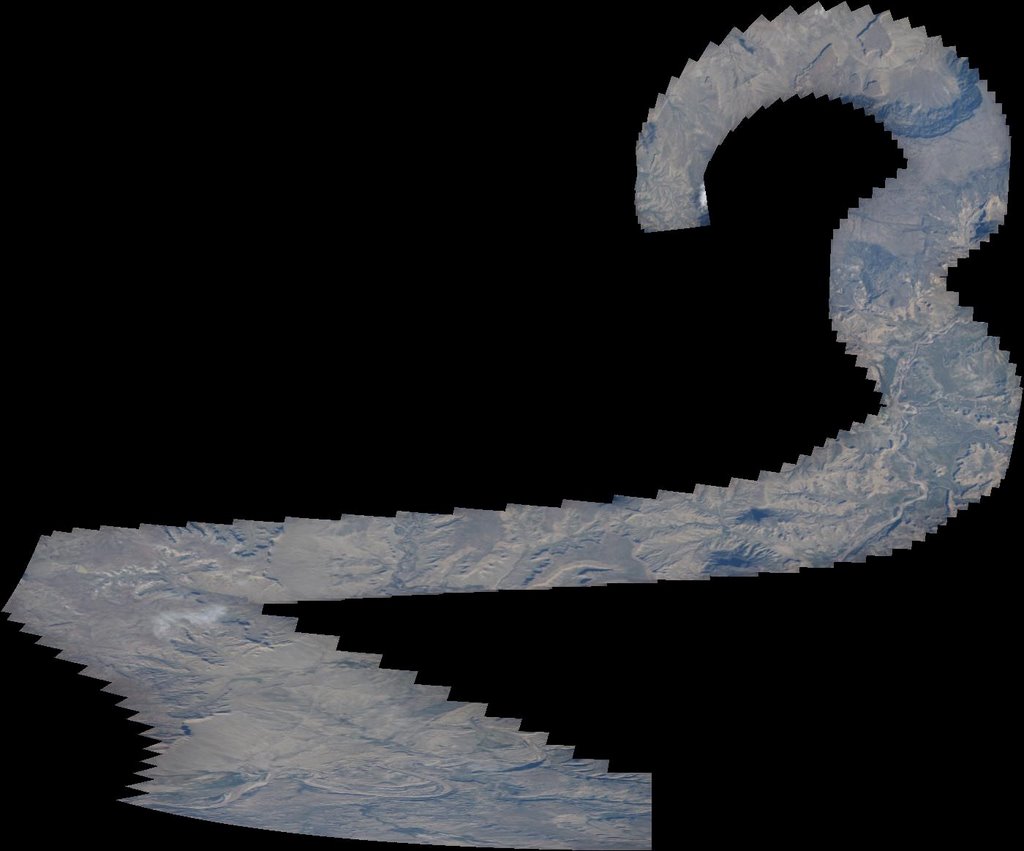
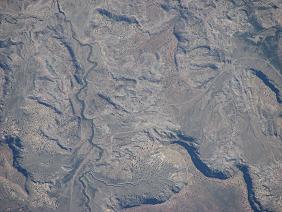
For the past two months, we have been talking to one of the maker of Autopano Pro so that we could process a very large panorama of about 609 images (each of which is 3.2 Mpixels large). The current beta release (version 1.3 RC 3) still has a memory leakage problem for very large panoramas like this one. This monster is about 2 GB large. One of the smaller panorama can be found here. Others can be found here.

Friday, November 10, 2006

Google can save your life


In a recent study, it was shown that good professionals could use Google in problems with hard to figure diagnostics. This is hardly a big discovery to the average person. On the other hand, I know first hand, of somebody who used Google and figured from the first three hits that he was having a big problem that could only be readily remedied by not staying in a high altitude environment and aiming straight for a hospital for treatment.

A C compiler for GPUs

While GPU programming might be fun on its own, the 4 to 5 times increase in speed is not likely to draw a whole slew of people into it. One of the reason may be that if you have to learn a different language, you might as well go straight for an FPGA instead. NVIDIA seems to have figured this out and they just came up with a bridge between the general community and GPU by announcing CUDA a C compiler for GPUs.

Thursday, November 09, 2006

Space Vantage Points


When Nadar went up his balloon 150 years ago and took the first aerial photo, he triggered Jules Vernes into writing "Five weeks in a balloon".
The first panoramic view of a natural disaster was taken one hundred years ago after the 1906 San Francisco Earthquake using a kite.

The first photo taken from space was obtained in 1946, from a V2 rocket and the first panorama in space was taken two years later.

Fifty years later, thanks to the HASP platform, we took one of the longest panoramic view from a high altitude balloon. This is mainly due to our ability to store large amount of data in common cameras (4GB).
. The interesting aspect of our approach relies on the fact that our low cost camera does not need to be equipped with either a GPS or an Inertial Navigational Unit: The use of a software like Autopano Pro enables us to patch automatically all of our pictures together and create a single large map.

Friday, October 27, 2006

Eye tracking and Autism: part IV

Here is a cheaper implementation of an Eye tracker. The details can be found on a wiki set up by Derrick Parkhurst. We are implementing one of these but have had some problems with cutting the chips out of the board and are about to start some test on it.

Monday, October 02, 2006

The slashdot effect

This Slashdot announcement for the preliminary results on GeoCam generated about 25,000 viewers in the course of two days. While the comment section on Slashdot is not that useful, we received some very helpful tips and ideas on our blog. I have stitched together some of these panaromas with one of the non-free version of the stitching algorithm and I am very impressed. The current panoramas are 25 to 30 MB large.

Tuesday, September 26, 2006

Cognitive Convergence


I am not blogging that much these days for several reasons. First, I am looking into how we can use some of the artificial intelligence techniques we are developing for the DARPA Urban Grand Challenge to diagnose and explore autism. I recently attended a talk by Hideki Kozima who uses of small robots like Keepon to evaluate the socialization of autistic kids. Take a look at the video here. After five to ten sessions with the Keepon, he could show the beginning of a joint attention development in autistic kids. This was very impressive.

I am also involved in the processing of the data we just received from our GeoCam on HASP. We have 4 GB of data to share with the rest of the world. We are developing a strategy on how to do this efficiently.

We are considering a run for the DARPA Urban Grand Challenge with Pegasus Bridge 1. Only this time, the mechanical aspect of the project will take a back seat to other technologies we are developing. We are interested in driver's gaze recording and supervised learning of road driving behavior. But more on this later...

Monday, August 28, 2006

Close enough


The issue of designing a collaborative task manager needs to also take into account real data from previous experiments where collaborative behavior took place. One of the issue is the sizing of the application. Soon into our experiment (in 2002), we jokingly came up with the DC law that stated that the size of the conversation threads between collaborating parties was 1/1000 th the size of the documents attached to these conversation threads. As of today, four years later, the size of the "library" of documents is 22.17 GB. The size of the conversation threads is 18.66 MB. Close enough. This is somewhat amazing that the "law" still holds. Indeed, in a matter of four years, new formats have appeared in the archives: MPEGs or very large JPEGs, yet the scaling still holds.

Saturday, August 12, 2006

Printfriendly